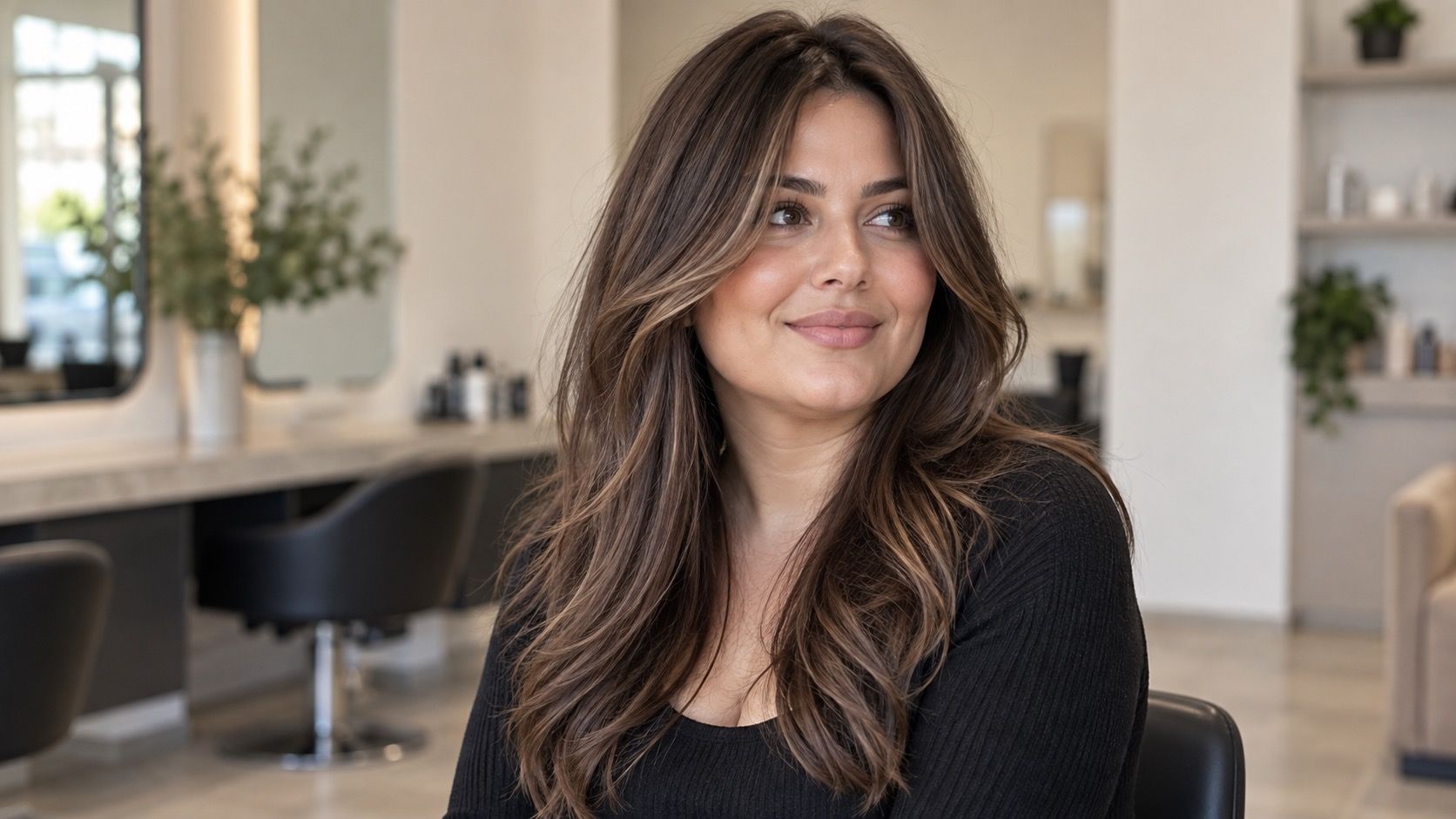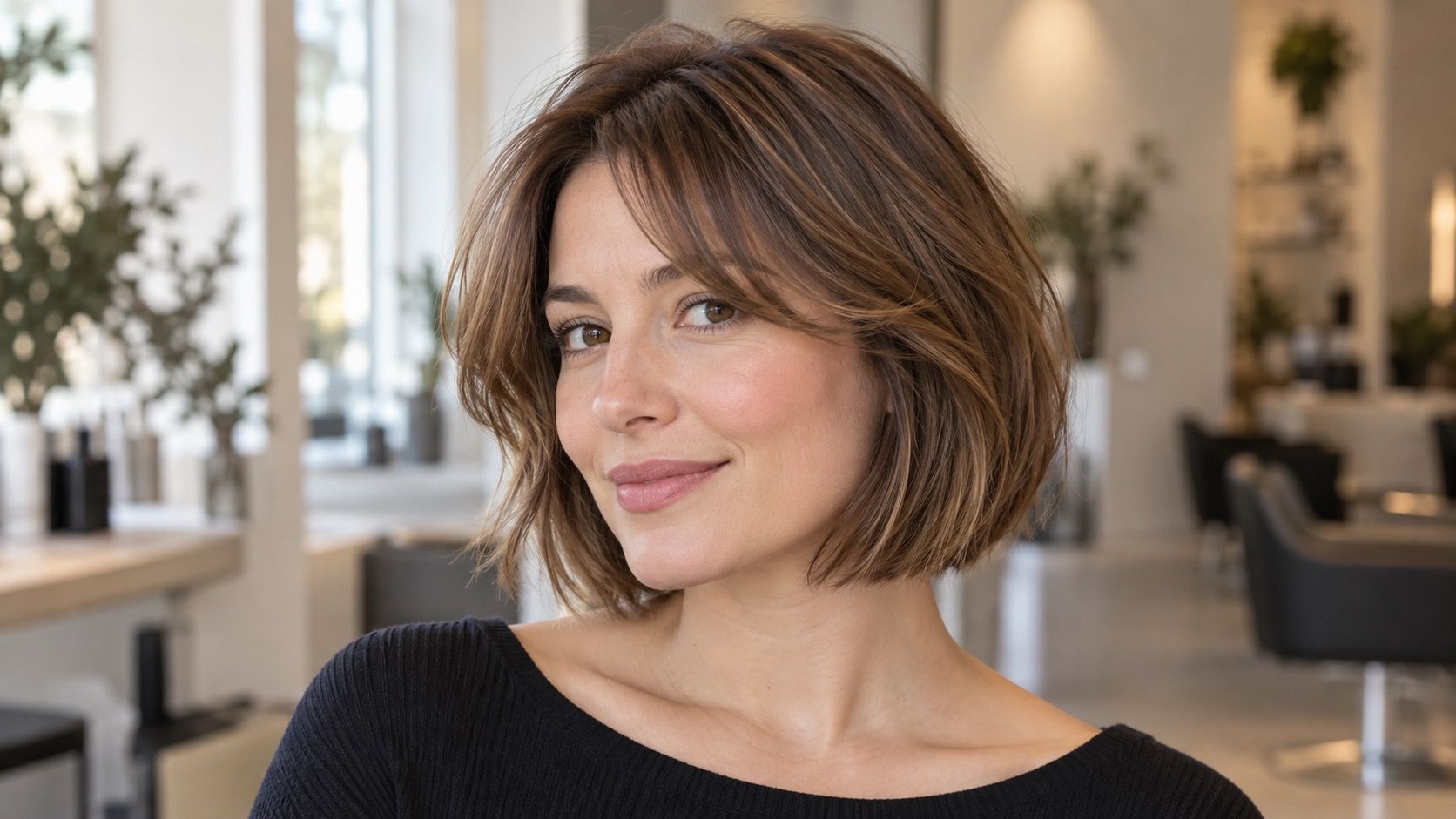
A heart-shaped face is usually recognised by a broader forehead and cheek area that narrows toward the chin, but the label is less useful than the proportions you can see in your own mirror. Hair can add activity at the temples, frame the cheekbones, or bring visual weight toward the chin. None of those choices is mandatory. A good try-on helps you decide which balance feels most like you before you make a cut that takes months to grow back.
Look for balance in the preview, not a correction
Begin with a simple photo: hair pulled back enough to show the hairline and face, but not stretched into an expression you never make. Then compare a few styles at the same scale. A high-volume crown, a wide fringe, and a chin-length bob can each alter the image dramatically, so changing all three at once tells you almost nothing.
Notice where the haircut has its widest point. Volume at the crown can feel elegant and lifted; volume around the jaw can feel grounded and playful. With a heart-shaped face, either can work. The better question is whether the silhouette appears intentional when you turn your head, wear glasses, or smile. A front-on filter is only the first viewing angle.
Do not let phrases about disguising a forehead or balancing a chin steer the whole decision. Features are not defects waiting for a fringe. If you love a clean centre part and visible forehead, that is a valid preference. The aim is to choose a line that works with your hair and makes the overall result feel coherent.
Test chin-length bobs and lobs by their exact endpoint
A chin-length bob often makes a compelling option because its perimeter introduces presence near the lower face. The key word is exact. A line that ends just above the chin reads differently from one that brushes it, and a few millimetres can be enough to change the effect. Preview the cut with the ends straight, then with the slight outward bend your hair might create after sleep.
A longer lob is less precise but more forgiving. At collarbone length it can be tucked behind an ear, worn with a side part, and pulled back when necessary. Add soft face-framing pieces if you want movement, but avoid assuming that every layer improves long hair. On fine hair, too much layering can reduce the sense of weight right where the cut needs it.
For thick hair, a bob can expand outward if its internal bulk is not considered. Ask a stylist about the dry shape and the way your natural texture grows after washing. A smooth photograph is not evidence that the same cut will sit smoothly when the weather turns damp.
Choose bangs for movement and upkeep
Curtain fringe is popular for haircuts for a heart face because it can soften into longer pieces without creating a solid wall across the forehead. It also has an escape route: you can pin it back or let it grow into layers. In a try-on, look at the length of the outer edges. Pieces ending around the cheekbone give a different frame from pieces that continue toward the jaw.
Side-swept bangs create a diagonal and can feel especially natural if your hair already prefers a side part. The practical check is your cowlick. If the hairline resists the direction, you may be committing to a blow-dryer every morning. Test the fringe slightly separated rather than perfectly sleek; that is usually the version you will meet in real life.
| Style to compare | What it changes | Reality check |
|---|---|---|
| Long curtain fringe | Frames forehead and cheekbones | Needs regular shaping |
| Chin-length bob | Adds a defined lower perimeter | Endpoint must suit your natural bend |
| Long layers with waves | Adds movement without losing length | Reference waves may require heat |
A full blunt fringe can look striking too, especially with a simple bob. It is simply a more committed choice: it changes the face immediately, collects oil quickly for many people, and may need trims between major cuts. There is no need to avoid it if you like the effect; just choose it with the maintenance included.
Keep long hair from becoming a heavy curtain
Long hair can be beautiful on a heart-shaped face, but a centre part and one-length ends may place most of its visual weight beside the upper face. If that feels static in a preview, try long layers beginning below the cheekbones, or a soft bend from mid-length down. The point is not to create width by formula; it is to give the eye more than one place to land.
Face-framing layers should match your habits. If you usually tuck your hair behind both ears, very short front pieces may vanish from the design. If you wear your hair down, pieces around the lips and jaw can create a noticeable change without sacrificing length. Test both options in a screenshot with your usual clothing neckline, because a high collar or wide neckline changes the visual proportion too.
Loose waves make a long cut feel less rigid, but the texture has to be plausible. If your hair is pin-straight and you dislike hot tools, ask for a cut that still looks purposeful smooth. If it is naturally wavy, avoid a reference that depends on separating every curl into perfectly polished ribbons.
Do not decide from an over-filtered image
Try-on tools are excellent for comparing direction, length, and fringe placement. They are not a promise about density, hairline behaviour, or a salon result after rain. Use a clear image without a beauty filter and keep the colour close to your own. A darker virtual colour can make an outline appear denser, while bright highlights can make the same cut feel more fragmented.
Take the preferred preview away for an hour and return to it. The most dramatic option often wins the first ten seconds; the version you still like later may be the better haircut. Compare it with a neutral expression and a broad smile, and view it small enough to see the total shape rather than individual strands.
If you are uncertain, choose a reversible version first: a longer fringe, a lob instead of a jaw-length bob, or layers that begin lower. A thoughtful haircut does not need to be timid. It simply leaves room for your hair to give you information after the first few washes.
Bring specific observations to the stylist
Save two or three preview images and make a short note beside each one. You may like the chin-level weight of one, the curtain fringe of another, and the soft wave of a third. That is normal; a stylist can combine principles better than they can copy a filtered image wholesale.
Ask what length will remain after your hair dries, how the fringe will sit with your natural part, and when it will need a trim. Mention whether you air-dry, use a diffuser, or reach for a brush only on special occasions. Those facts should influence the cut more than a generic face-shape rule.
The best hairstyles for heart shaped face are the ones that retain their character in everyday conditions. Choose the balance you enjoy, then let the consultation turn that preference into a shape that is yours.