People often say an oval face can wear anything, which sounds liberating until it becomes useless in front of a salon mirror. You still have a forehead, a jawline, hair that may flatten by noon, and a tolerance for styling that is entirely your own. The best hairstyles for oval faces are not a permission slip for every trend. They are cuts whose shape supports the features you want to notice and whose maintenance fits the life you actually lead.
Use the try-on to test a choice, not prove that oval is versatile
An oval face generally has balanced length and width with a softly tapered jaw, but that description leaves out the details that drive a haircut. A high forehead changes the effect of a middle part. A small chin can make a very heavy lob feel dominant. Dense curls produce a different outline from fine, straight hair at exactly the same nominal length.
Start an oval face hairstyle try on with your everyday hair colour and a neutral, front-facing photo. Compare one thing at a time: perhaps a blunt bob versus a softly layered bob at the same jaw level. Then look at each from a little distance. A close crop is good for fringe placement; a smaller view tells you whether the overall silhouette has presence.
Do not mistake flexibility for a need to stay safe. If you have always worn long hair because it was easy, a textured bob or pixie may reveal a version of your face you genuinely enjoy. The sensible check is whether that discovery survives a version with less shine, less curl, and the parting you naturally fall into after washing.
Compare short and medium cuts by the neck and jaw, not the trend name
A pixie cut can be brilliant on an oval face because it exposes the cheekbones and jawline, but the amount of exposure is the decision. A close-cropped nape with longer texture across the crown reads quite differently from a soft bixie with weight around the ears. Preview both with and without fringe. The difference often comes down to two inches of front length.
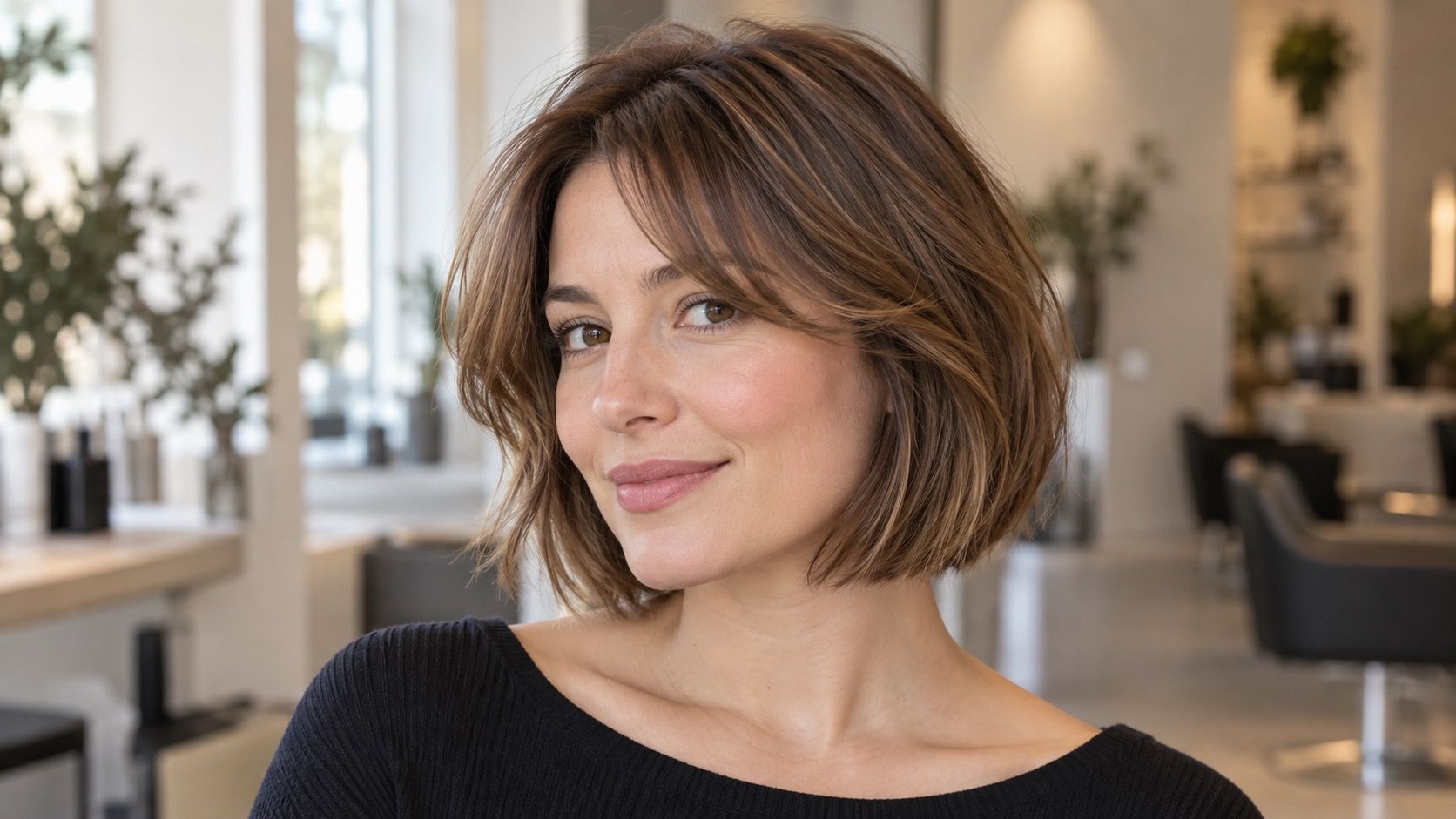
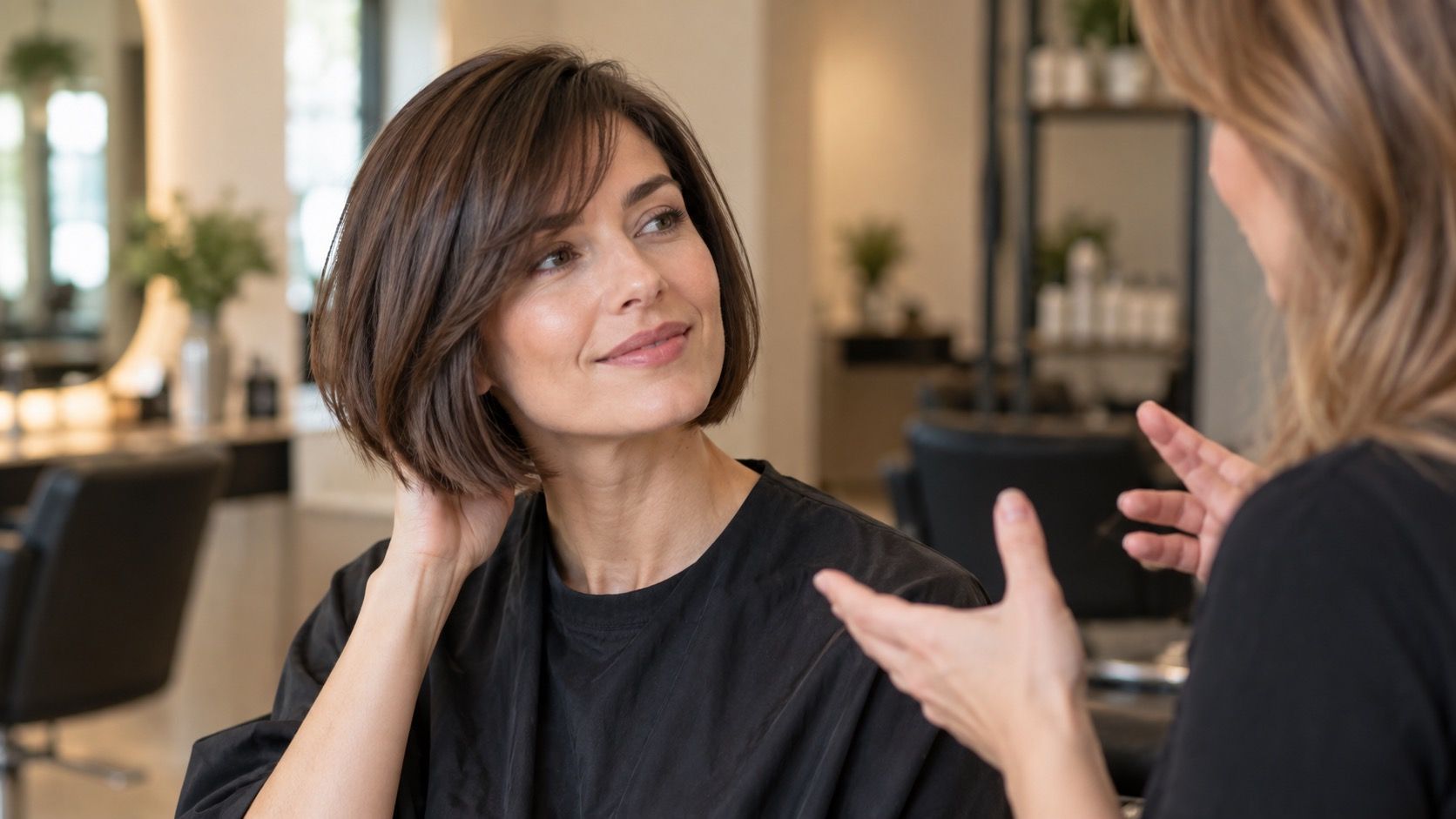
A bob is less of a single cut than a family of agreements. A jaw-length blunt bob looks intentional and graphic; a French-inspired bob with soft texture may look more relaxed but asks for more styling. If your hair is fine, check whether the try-on relies on too much side volume. If your hair is thick, imagine the same edge after it has expanded in damp weather.
For a first move away from long hair, a collarbone lob is usually easier to live with. It can be tucked behind an ear, clipped back at the gym, and reshaped with a quick bend through the ends. Ask yourself a plain question: would you still like the cut if it dried naturally on a weekday? If not, the reference photo may be asking more of you than it admits.
Let long hair frame the face instead of hiding behind it
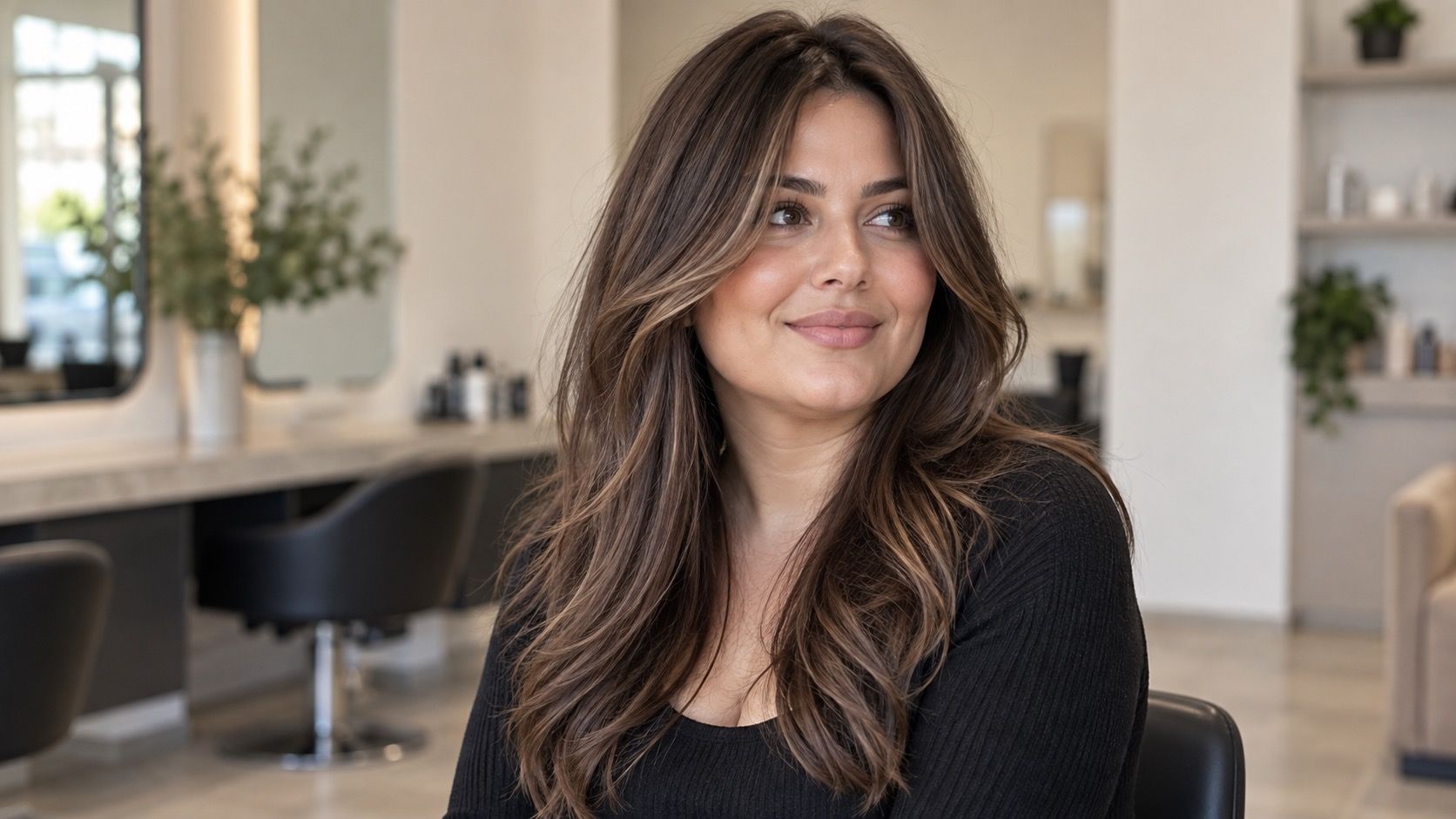
Long hair can look especially composed on an oval face, yet a single unbroken curtain of hair can become visually quiet. Face-framing layers beginning around the cheekbone, mouth, or jaw introduce a change of direction. Test each placement in a preview, because layers at the cheekbone are more noticeable while layers below the jaw are usually easier to grow out.
A centre part makes long hair look symmetrical and modern. It also makes roots and forehead highly visible, which is fine if that is the balance you like. An off-centre part has a gentler effect and often gives fine hair more apparent lift. Neither deserves to be marketed as the correct part; look at your own hairline and see which one does not require constant persuasion.
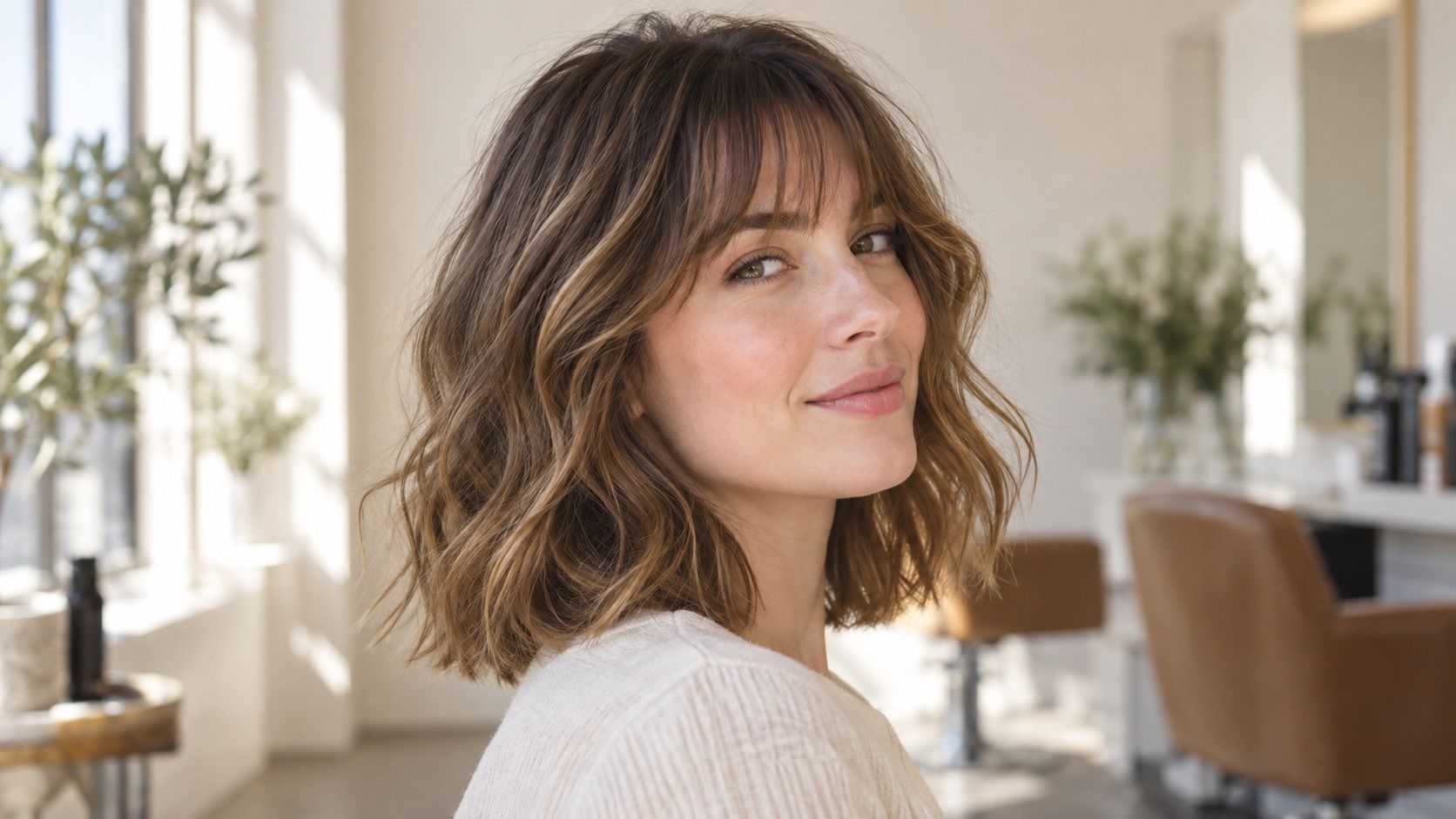
Waves are another point where reference images can mislead. Loose, polished waves add width and softness, while your natural bend may be narrower or more irregular. Preview a long layered option with subtle movement rather than full event curls. A good long cut should have an outline even when you have only used a dryer and your fingers.
Try bangs as a maintenance decision
Fringe is appealing on an oval face because it changes the forehead-to-jaw balance immediately. A wispy fringe keeps that change light, while a fuller straight fringe makes a stronger horizontal statement. The second option can be excellent with a sharp bob, but it needs a realistic test: does your hairline split it into two pieces the moment the weather changes?
Curtain bangs are often a lower-risk route because they can open up, be pinned aside, and merge into layers as they grow. Still, they are not maintenance-free. Their shape depends on a deliberate part and some root direction. In a preview, look at them when the centre opening is slightly uneven. That is closer to a real morning than the perfectly balanced salon photo.
| Cut to compare | Best first check | Routine question |
|---|---|---|
| Textured pixie | Front length around the forehead | Will you style it most mornings? |
| Jaw-length bob | Where the line meets the jaw | How often can you trim it? |
| Long layers with curtain fringe | Layer starting point | Will you blow-dry the fringe? |
If you want bangs but dislike regular salon visits, choose a longer, softer version and say that plainly. A stylist can adjust the density and shape to create a fringe that remains useful rather than perfect for only the first ten days.
Match hair density to the outline you are imagining
Fine hair often benefits from an outline with some weight. A one-length bob or minimally layered lob can look fuller than a heavily feathered cut, even if the latter photographs airier. This is where a try-on needs a dose of skepticism: apps can add volume visually, but they cannot tell you whether your ends will look thin after a month of heat styling.
With thick hair, strategic internal removal can make a bob or shoulder-length cut move rather than sit like a block. But too much removal may make the surface frizz or cause the lower edge to look scattered. Bring up your texture in the consultation. Saying that you want swing without a fluffy triangle gives more information than requesting a generic layered cut.
Curly hair adds a separate dimension: the dry shape, not the wet length, is what you will wear. Test references that resemble your curl pattern and shrinkage. A face-framing curl that lands at the cheek when wet may spring to eye level when dry, changing the whole relationship between cut and face.
Leave with a haircut you can describe in ordinary language
Save a few images from your try-on, but make notes about what you like in them. Perhaps it is the visible jawline of a chin-length bob, the softer forehead line from curtain bangs, or the fuller edge of an almost one-length lob. Those observations help a stylist translate an image instead of copying it blindly.
Ask how the style changes as it grows, whether it needs a round brush, and which single product would make the biggest difference. A salon finish can make almost any haircut for an oval face look polished for an afternoon. The useful test is the day after, when your own hands are doing the work.
There is no prize for proving you can wear every style. Pick the one that feels specific to you: short because you want your face visible, long because you love the movement, or somewhere between because it makes daily life easier. That is a much better use of oval-face versatility.