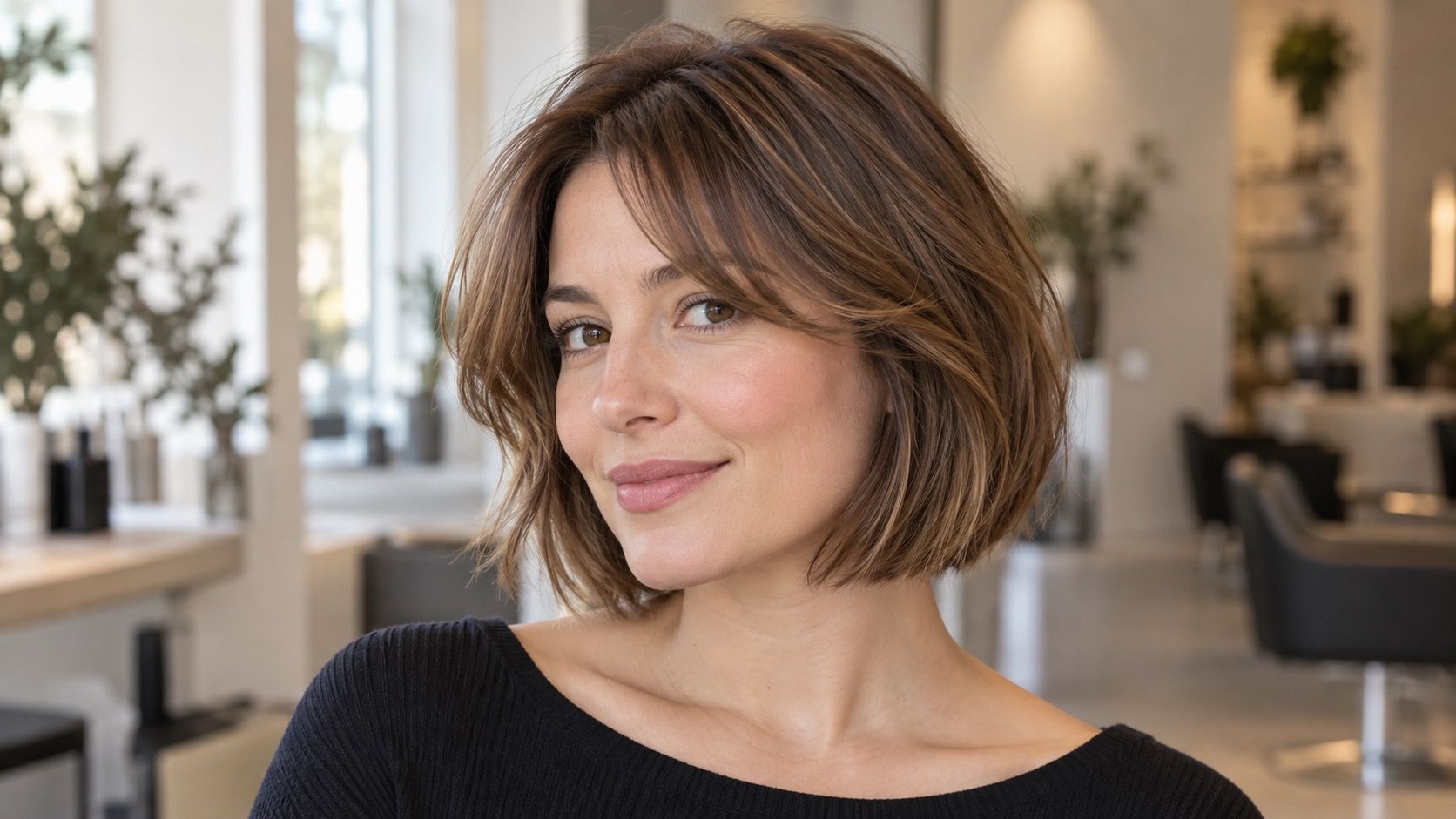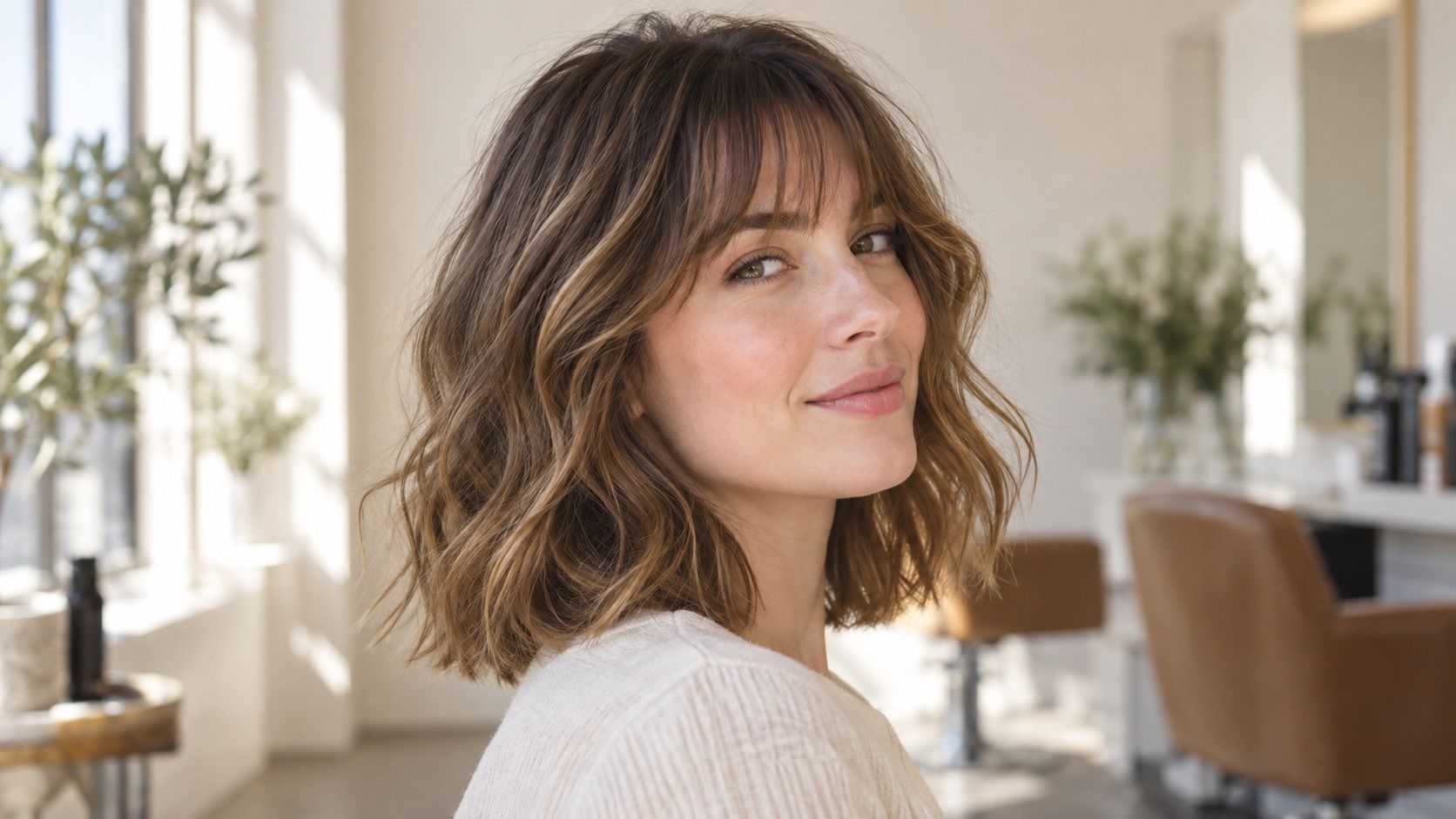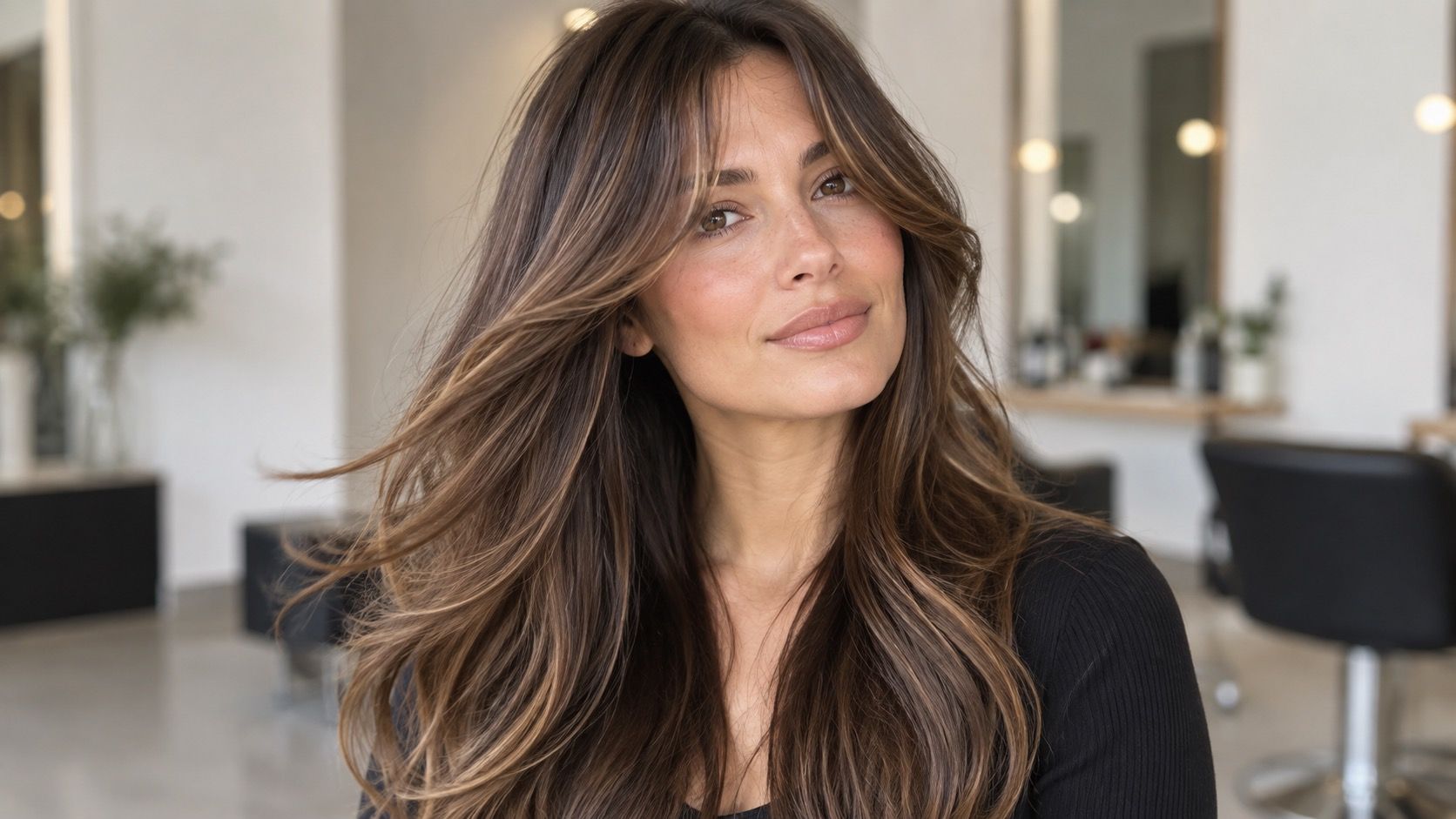
Long hair can look as if it offers only two choices: keep it or cut it off. In practice, a few inches of shape, a different end line, or face-framing layers can change the whole impression while leaving the length you have patiently grown. Long hairstyles try on tools help most when you compare those smaller decisions under realistic conditions. A glossy image can show possibility; your own part, density, and styling habits decide whether that possibility is worth the appointment.
See what a long-hair preview can actually reveal
With long hair, the first useful contrast is not length versus length. It is weight versus shape. Place your current silhouette next to one with soft layers and one with a firm blunt baseline. Look at the space around the shoulders and chest. A layered image may make the hair appear lighter and more mobile, while a one-length version can read fuller and calmer. Neither is a correction; they are different ways of carrying the same amount of hair.
Use photos taken from slightly farther away than a standard selfie. Long hair occupies more of the frame, and a close camera can make the ends seem fuller than they are. Check the preview with your usual part and with hair behind one shoulder. If all the interest disappears once the hair is moved, the cut may rely on front styling more than you expect. That is particularly relevant if you spend most days in a low ponytail.
Face framing and full layers are not the same promise
Face-framing layers put the change at the front: the shortest pieces might begin around the cheekbone or jaw, then melt into the length. They are useful if you like your long hair but miss some definition near the face. Full layers alter the body of the haircut, often reducing visual weight through the mid-lengths and adding movement when the hair is waved. A preview can show the outline, but ask yourself which part of the hair you want to notice when it is simply air-dried.
A butterfly cut is commonly pictured with dramatic volume, yet that picture often includes a round-brush blowout. On naturally straight, fine hair it may look softer; on thick hair it can create abundant shape but also more pieces to style. A long shag pushes texture further and is not just a butterfly cut with a cooler name. Compare the back view as well as the front. If you love the layers only when they are curled away from the face, plan for that styling step honestly.
| Change | Preview it by checking | What it asks of you |
|---|---|---|
| Face-framing layers | Shortest point at cheek or jaw | Some attention around the front |
| Full long layers | Shape through the back and sides | Texture shows best with movement |
| Blunt long cut | Density at the bottom edge | Less visible shape, strong baseline |
Pick the end shape before discussing the layers
The last few inches are the quiet architecture of long hair. A U-shaped cut keeps a rounded, soft centre while preserving fullness at the edges. A more V-shaped line creates a visible point down the back and can make the hair seem longer, though the outer corners become less substantial. A blunt line gives the densest appearance. Try each in a back-view preview, ideally while wearing a plain top, because patterned clothing can hide the outline.
Think about how you wear a ponytail. A V shape can look elegant when hair is down but may produce narrower tails; a blunt line tends to keep a fuller end. This is not a rule, just a useful trade-off to put on the table. If you have been growing out old layers, tell the stylist which parts feel non-negotiable. “Keep the perimeter as full as possible” is clearer than asking vaguely for health or volume.
Use long bangs for a lower-commitment change
Long curtain bangs can make a familiar cut feel new without asking you to sacrifice the overall length. In a preview, check them with a middle and an off-centre part, then with the front tucked behind the ears. They should blend into the side layers when you do not want a fringe moment. A simulated curtain that is too short or too dense may look striking but can become the only thing you see in every mirror.
Pay attention to your hairline and the amount of hair needed to make the front look present. Fine hair may need a restrained section to avoid thinning the sides. Thick hair can need more softness so the bangs do not sit as a heavy wall. Ask how they will behave after a natural wash and whether the dry length will be adjusted. Long bangs are forgiving only when their shape has room to move.
Keep your reference realistic in the salon chair
Bring images that resemble your own texture and density, including one taken without elaborate styling. Point to the features you want: a fuller baseline, pieces beginning below the chin, or a back shape that still looks good in a coat. Avoid asking for a result from a photo while hiding the fact that it was created with extensions, major curl work, or a different hair type. A stylist has much more to work with when the request is visual and specific.
Finally, agree on the first change rather than the maximum change. Starting with longer face framing or fewer layers preserves a route to more shape later. Take a quick photo after the appointment in ordinary light and revisit it after your first home wash. That is the honest test of long haircuts: not whether the salon finish impressed you for an hour, but whether the new shape earns its place in the routines that made you keep your length in the first place.
Check maintenance without turning the decision into a chore
Long hair changes are sometimes sold as effortless, yet every shape has a small cost in attention. Face-framing pieces may need a quick pass with a dryer so they do not bend in opposite directions. A layered cut can make waves look more dimensional, but it can also make the ends look less uniform when you straighten them. Consider the finish you return to after a normal sleep, not the one achieved with a full styling session. This is where a realistic preview earns its place: it helps you reject an image that only works under conditions you never create.
Talk about maintenance in plain terms. Ask whether the cut needs regular reshaping to keep its outline, whether your usual ponytail will still feel comfortable, and where the shortest pieces will fall during the first few months of grow-out. If the answer involves a technique or product you do not use, ask to see the lower-effort version. Long hair has the advantage of patience. A thoughtful, modest change can give you a fresh silhouette now while keeping enough length for you to revise the plan later.