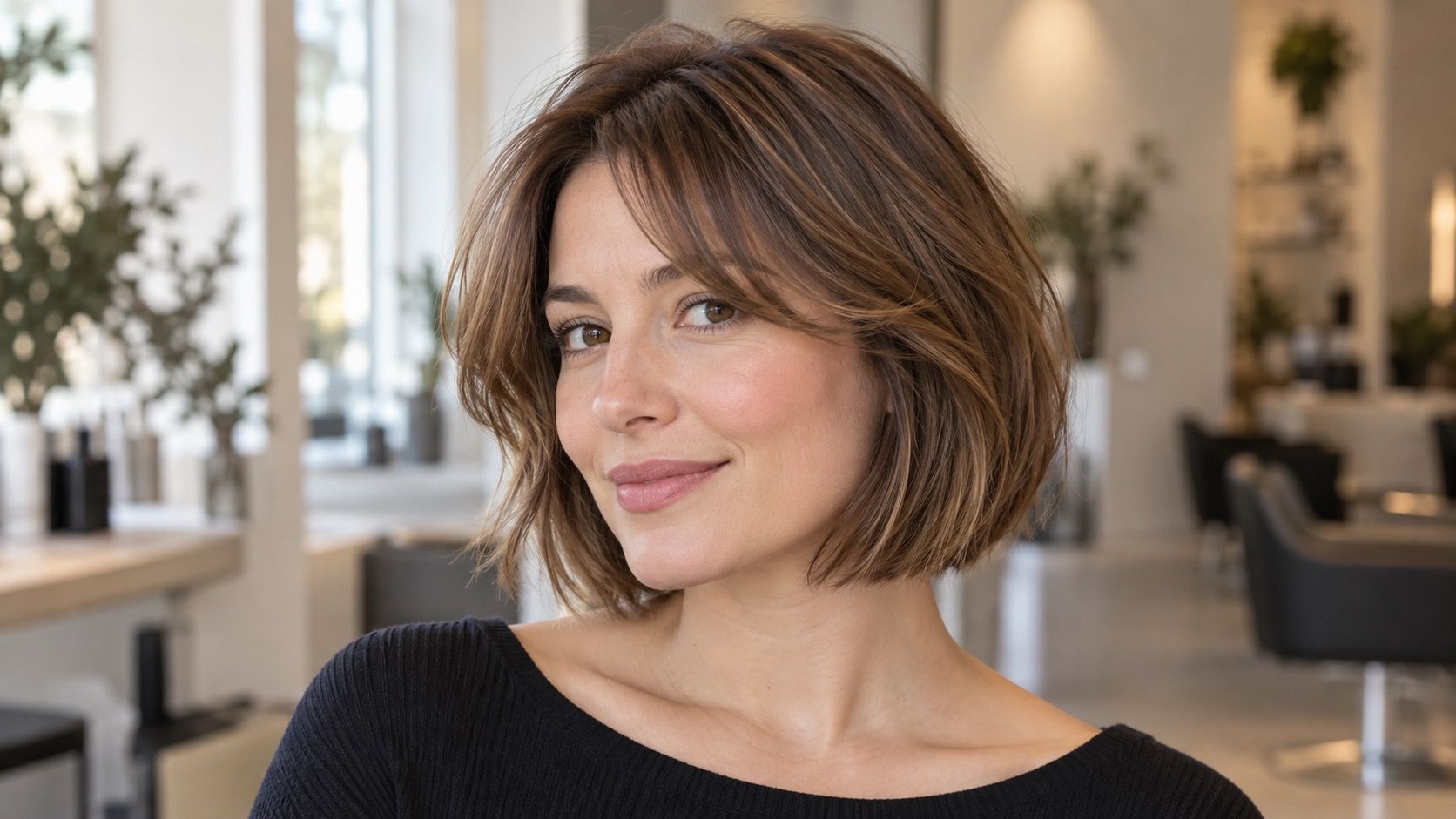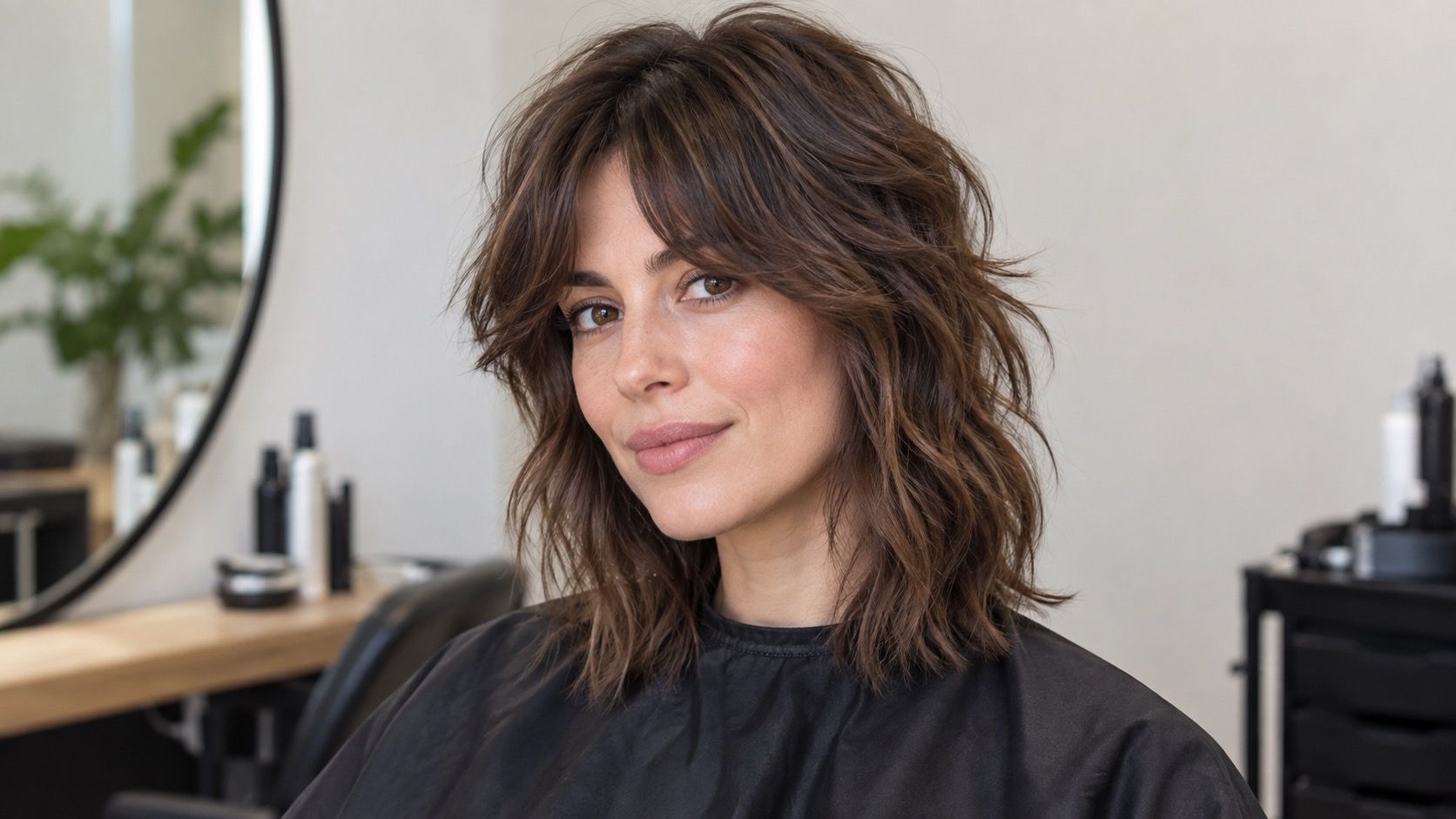
A shag haircut try on can make a layered cut feel like a low-stakes experiment, which is helpful because these shapes are easy to romanticise from one perfect image. A wolf cut try on is even more dramatic: crown volume, shorter pieces and a longer back can look electric in a selfie. The sensible aim is not to decide whether you are “the type” for either cut. It is to see what degree of contrast you want, where you are willing to lose weight, and whether the styling implied by the picture belongs in your real routine.
Separate the shag from the wolf cut before comparing them
A shag is usually a softer, more distributed layered shape. It may have movement around the face and crown, but the transition through the lengths can stay fairly blended. A wolf cut typically pushes the contrast further: shorter, fuller layers above and a more visibly elongated back. In a layered haircut simulator, that difference may appear as a stronger crown and a lighter, more disconnected lower edge.
Try each version with similar length, colour and parting. If the wolf cut preview also gives you huge curls and the shag stays smooth, you are comparing styling effects, not cuts. Look at the silhouette from forehead to nape. Does it feel like a change in personality you want to maintain, or like a clever image that depends on every strand sitting just so? That small moment of doubt is useful, especially before a large amount of internal weight is removed.
Use the preview to choose the amount of contrast
Make three deliberate versions: long face-framing layers, a moderate shag, and a bolder wolf-inspired shape. The first shows what happens when you merely lighten the front. The second tests movement at the crown. The third reveals whether you enjoy a visible separation between the top and the ends. Viewed together, they are more informative than twenty slightly different filters.
Pay attention to the perimeter. A cut can have plenty of layers and still retain a substantial lower line; another can leave the ends looking wispy. If you wear your hair down most days, the perimeter is what you see in mirrors from a distance. If you often tie it up, shorter crown pieces and fringe become more important because they are the pieces that escape first. Decide which of those daily scenes matters more before calling one result the winner.
| Preview style | What to inspect | Practical caveat |
|---|---|---|
| Soft shag | Blending from crown to ends | May need shaping to keep layers distinct |
| Wolf-inspired cut | Contrast between crown and back | Grow-out can feel more obvious |
| Long layers | Movement without a broken perimeter | Can look subtle in a single selfie |
Check density and crown volume with a skeptical eye
Virtual hair often supplies the one thing many people wish for: a buoyant crown. Real crown volume depends on density, direction of growth and how your hair dries. If yours lies flat at the top, a preview with a rounded, lifted silhouette should be read as a styling idea, not a promise from the cut. Shorter layers can remove heaviness, but they cannot rewrite a stubborn part or create strands that are not there.
Dense hair has a different issue. A very layered image can look airy in the app while the same removal of weight makes the ends puff or split into too many sections outside. Think about where your hair is thickest. Take a natural-light photo from slightly above as well as straight on, then see if the virtual shape respects that distribution. A hairdresser needs this information to decide whether the crown needs layers, the ends need preservation, or both.
Try bangs and texture as everyday details
Curtain bangs often soften both shags and wolf cuts, but they also put a small styling decision at the front of every morning. In the preview, compare a longer curtain version with a shorter, more emphatic fringe. Look at how it meets your natural part and whether it leaves enough hair around the temples. If you wear glasses, repeat the test with them on; the front pieces may sit quite differently against the frames.
Texture is where virtual previews become most flattering. A tousled finish can suggest effortless movement while hiding a great deal of deliberate drying and separation. Do not reject the look for that reason. Simply ask what you would accept: air-dried texture that varies day to day, a few minutes of shaping around the face, or frequent heat styling. The answer may lead you to a softer shag rather than a high-contrast wolf cut, and that is a useful distinction.
Imagine the fourth week, not only the first haircut day
Layered cuts change character as they grow. Short crown pieces become less buoyant, a fringe moves through an awkward length, and a dramatic wolf shape can gradually soften into a shag. Look at your saved preview and ask which version you would still enjoy when it is no longer freshly cut. If the whole appeal depends on sharp contrast at the crown, plan for regular shaping. If you prefer a quieter grow-out, retain more length and choose less aggressive layers.
This is also where previous colour or fragile ends matter. A filter has no view of how much hair can comfortably be removed. Tell the stylist if the bottom lengths are delicate or if you are growing out a blunt cut. A good layered shape works with those facts. The most convincing digital result is not necessarily the one that should be copied without adjustment.
Use the try-on at the consultation, then let the hair decide
Bring one shag image and one wolf cut image, even if you think you have chosen. Say what you are responding to: the crown lift, the movement around the cheekbones, or the longer back. Ask which elements will work with your density and how short the shortest pieces would be when dry. That opens a real conversation instead of demanding an exact replica of an image assembled by software.
It is perfectly reasonable to land between the two labels. A stylist may suggest a shag with a little more crown texture, or a wolf-inspired outline that keeps the ends fuller. The virtual preview has done useful work if it helps you name the level of drama you want. The final cut should be tailored to your own texture, styling patience and grow-out plan, not to the most dramatic thumbnail in the set.