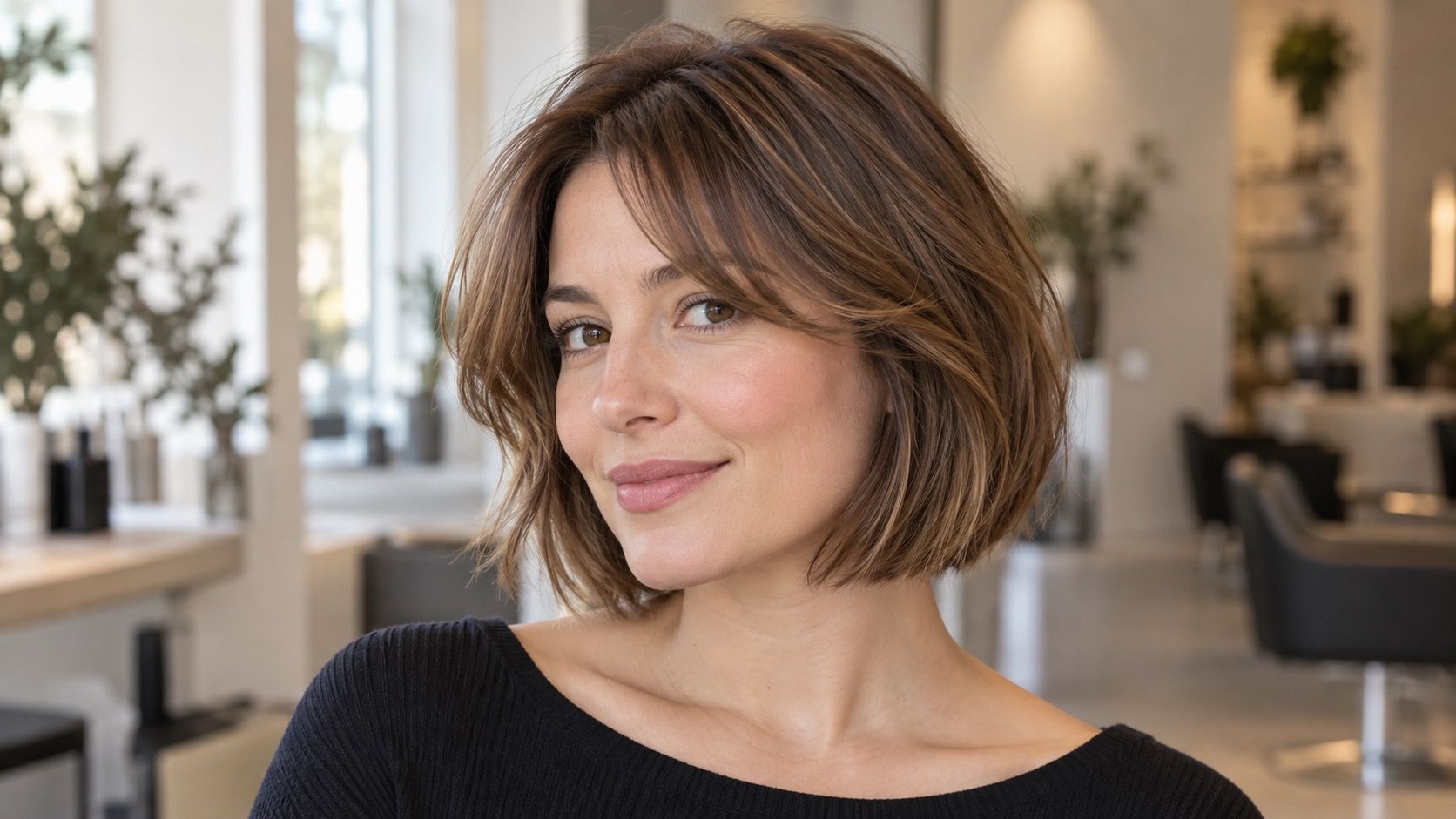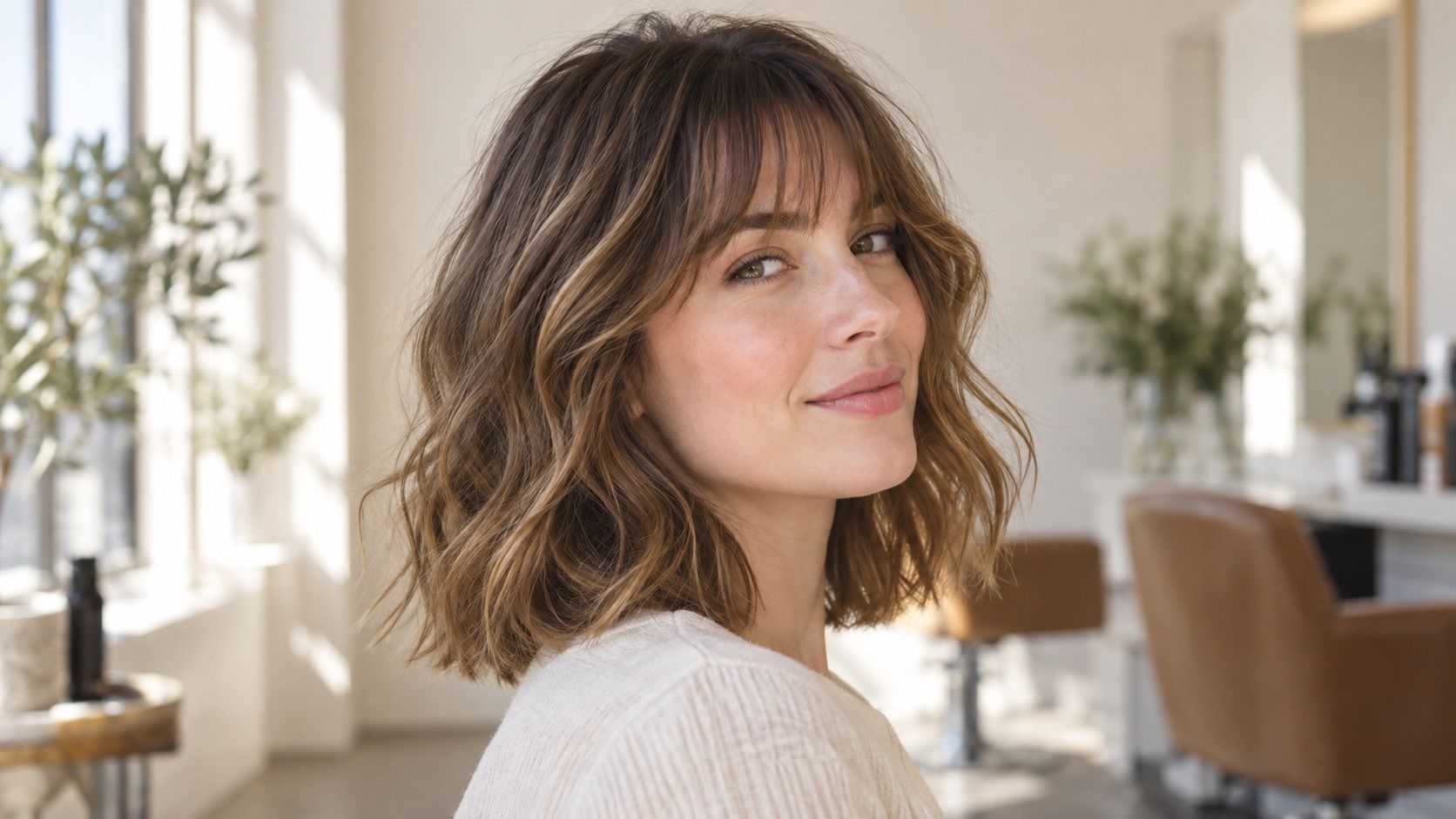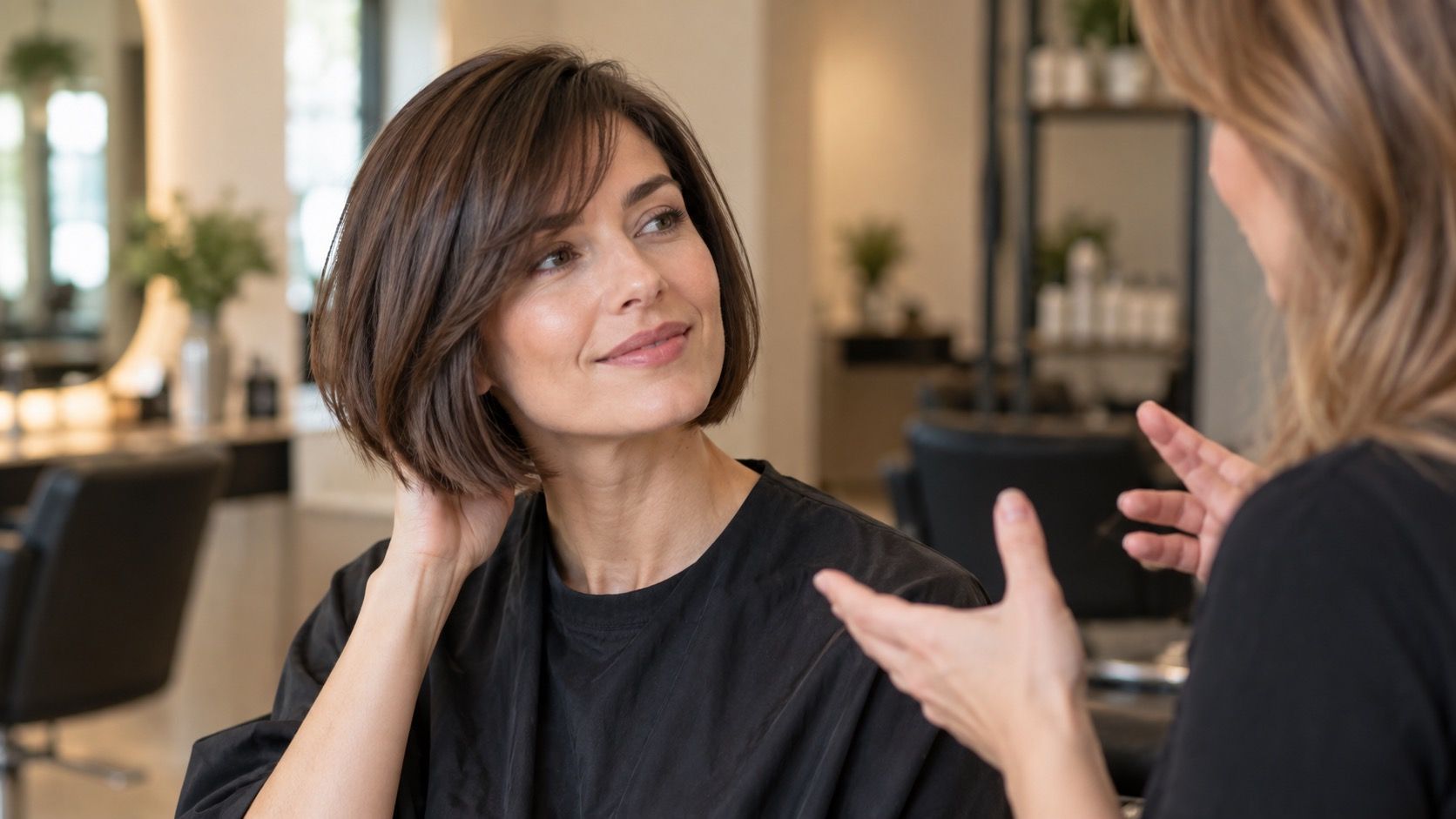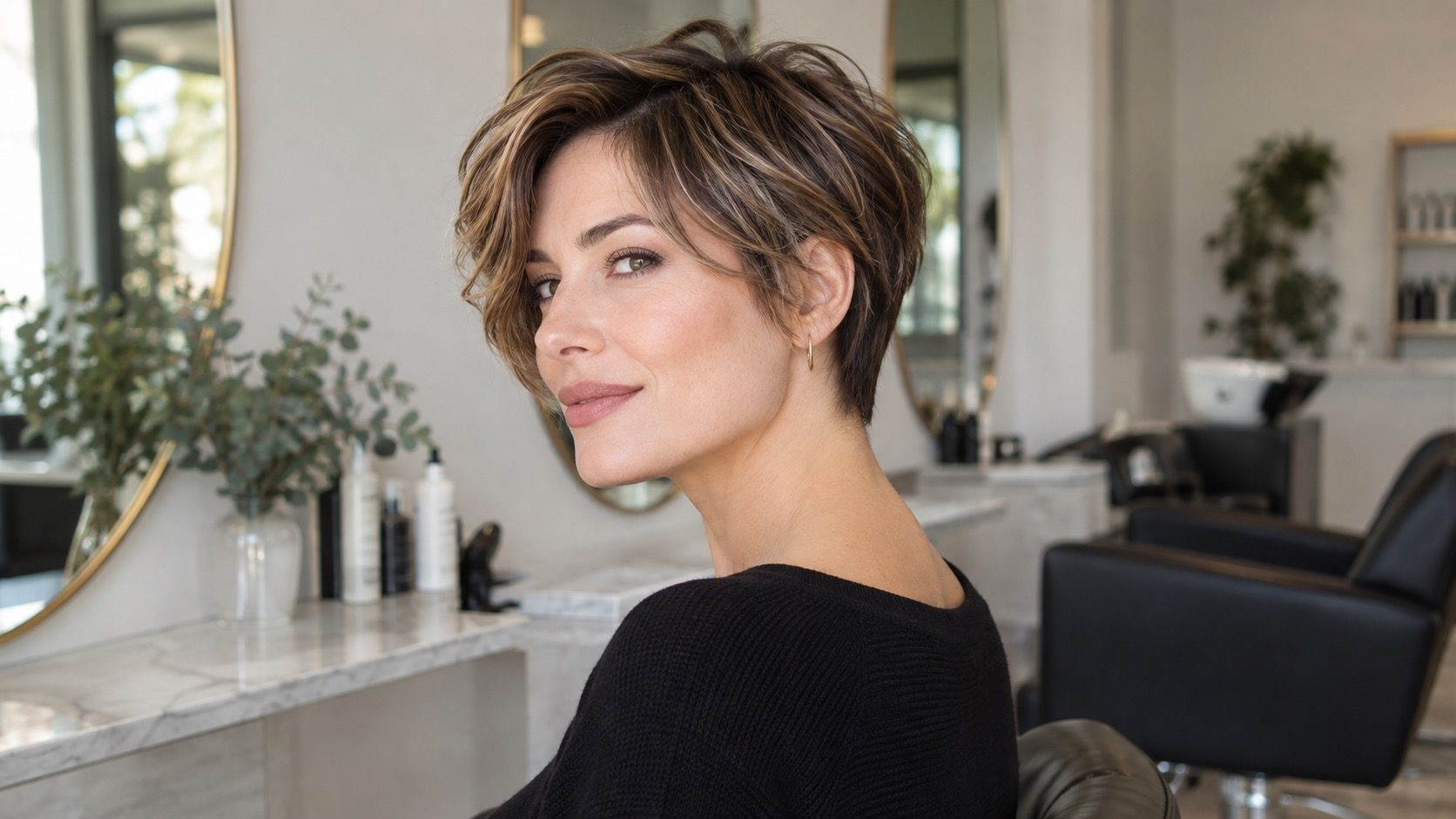
Going short is rarely about finding one flattering image. It is about deciding which change you want to feel every morning: an exposed neck, less weight at the shoulders, a sharper outline, or simply a haircut that stops disappearing into a ponytail. Short hairstyles try on tools are helpful when they are used as a comparison board, not as a contract. The practical work begins when you look beyond the front-facing result.
Notice what changes when hair leaves your shoulders
A short haircut shifts the balance of everything around it. Earrings, necklines, brows, and the line of the jaw become more visible. In a try short hair filter, put your current hair beside a chin-length version rather than jumping immediately to a pixie. The contrast shows whether you are responding to the clean outline or merely to the novelty of seeing more face.
Check the preview with the clothes you actually repeat: a high collar, a gym top, a work shirt, and a coat. A cut that feels crisp with a bare neckline can look quite different once a scarf is pressing it outward. I would also make a side-by-side image with your hair tucked behind both ears. If that view feels right already, short hair may be a natural next step; if it feels too exposed, a longer bob is a useful pause.
Compare a pixie, bixie, and French bob by commitment
A pixie is not merely a shorter bob. It changes the silhouette at the crown and temples, so a short haircut simulator should be judged from three angles: straight on, three-quarter, and profile. Look for how much height the preview gives the crown and whether the fringe is doing all the softening. A very smooth simulated pixie can conceal the fact that your own hair grows forward or expands at the sides.
A bixie sits between the two: enough length for texture and small shifts in the part, but still a clearly cropped shape. A French bob, usually near the jaw, keeps a stronger perimeter and gives you more coverage around the ears. Neither is automatically the “safe” option. Dense hair can make a jawline bob feel broad unless it is shaped thoughtfully, while fine hair can make a softly layered bixie look fuller than a blunt short cut.
| Cut to preview | Look at first | Question for real life |
|---|---|---|
| Pixie | Crown height and temple shape | Will you style it after every wash? |
| Bixie | Texture around ears and nape | Do you want parting flexibility? |
| French bob | Jawline width and end weight | Will the neckline length suit your collars? |
Do not skip the side view and neckline
The front view gets all the attention because it is where filters are most convincing. The profile tells you whether the cut follows the head shape in a way you like. Use a mirror or a short phone video and notice the area behind the ear, the nape, and the back of the crown. A crop that looks polished in one still image may depend on a tightly tapered neckline that you do not want to maintain.
The nape is also where your hair’s habits become obvious. Some people have a low swirl or a section that grows upward, and a very short finish can exaggerate it. Mention it before the first snip. A stylist can leave a little extra softness or choose a neckline that grows out less abruptly. This is one of those small technical choices that makes the fourth week of the haircut better than the first photograph.
Match density to your daily styling tolerance
Short hair is often described as easy, which is only half true. Washing takes less time, but the cut may show bedhead more readily than longer hair. Fine hair can gain apparent density from a blunt bob or a carefully placed crop; very thick hair can need internal removal so it does not form a triangle around the ears. A preview gives the outline, not the weight distribution.
On a normal morning, consider your tools. If you use a dryer, a small brush, and a little product without resentment, you have many options. If you want to air-dry and leave, choose a preview with a forgiving texture rather than a sleek editorial finish. Ask the stylist what the haircut looks like after air-drying, not only after their final blowout. That answer matters more than a perfect salon mirror moment.
Plan the grow-out before you book
The question is not whether a short cut will grow; it will. The question is which awkward stage you prefer. A pixie often needs shape maintenance sooner, while a bob can become a lob with patience but may flip at the shoulders. Put a medium-length preview next to your chosen short style and see whether the route between them looks acceptable. It is a sensible way to reduce panic if you decide the crop is not your long-term look.
Ask about the first two appointments: the initial cut and the point at which the shape usually needs attention. You do not have to commit to a maintenance schedule on the spot, but knowing it changes the decision. Save a few references that show texture similar to yours, not only the same face shape. The most useful short style is the one that works from a damp Tuesday morning through its unglamorous fifth week.
Make the final comparison with a haircut you can describe
Before booking, reduce the preview to two candidates and name the difference between them. Perhaps the bob keeps your jawline covered while the bixie gives the crown more air; perhaps the pixie is appealing only from the front. This small exercise prevents the vague request for “something shorter” that leaves too much interpretation in the chair. Save a front, side, and back image for the option you choose, and circle the one feature that must stay: softness at the nape, length over an ear, or a fringe that can be pushed aside.
It also helps to say what you do not want. If you dislike a hard undercut, a stacked back, or daily heat styling, put that into the conversation early. A skilled stylist can offer a related shape that respects those limits. After the cut, photograph it again once you have washed and styled it yourself. That private record makes the next appointment easier: you will know whether the neckline was right, whether the crown needed more weight, and whether the short style fits your life beyond the first exciting day.