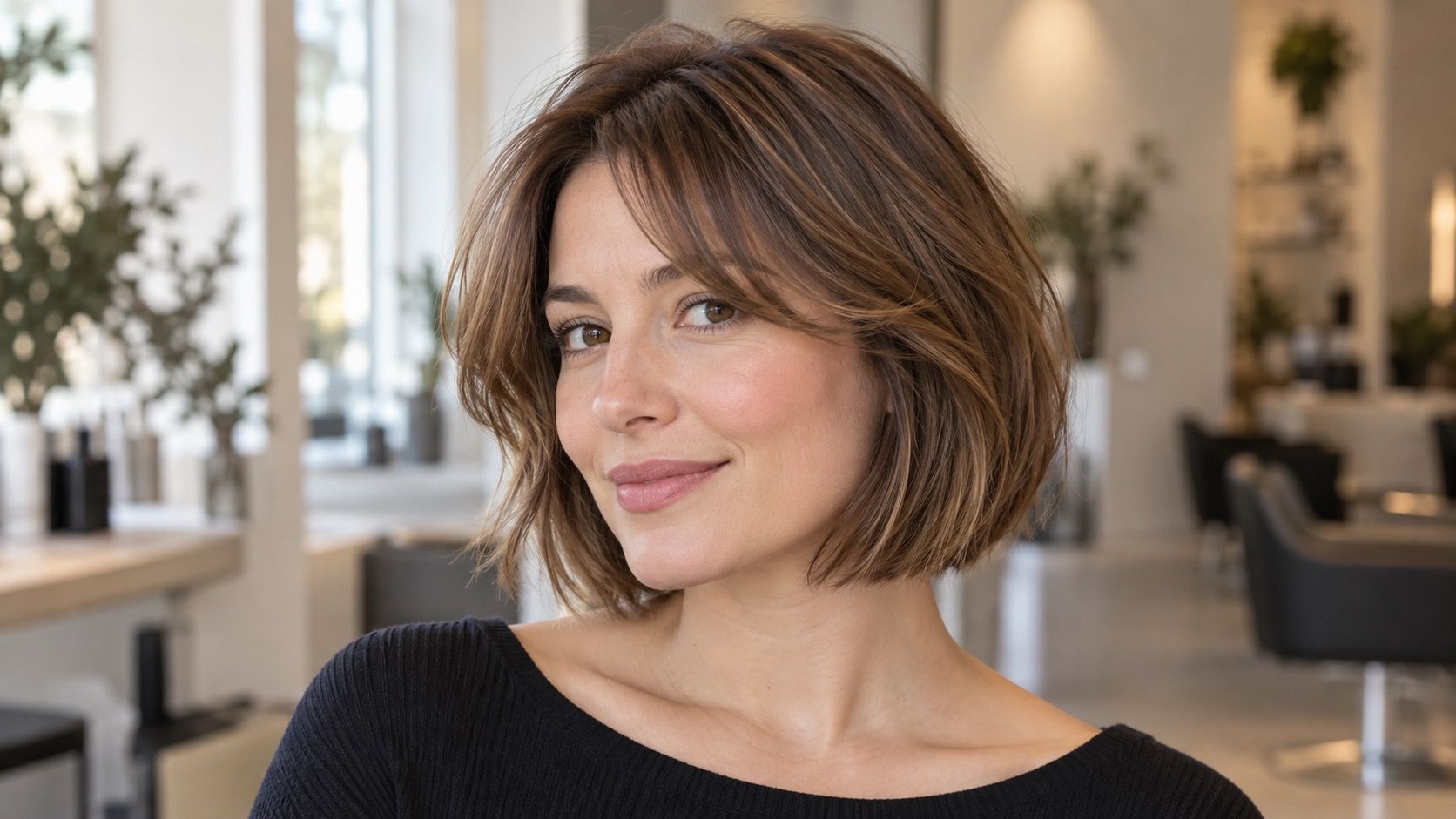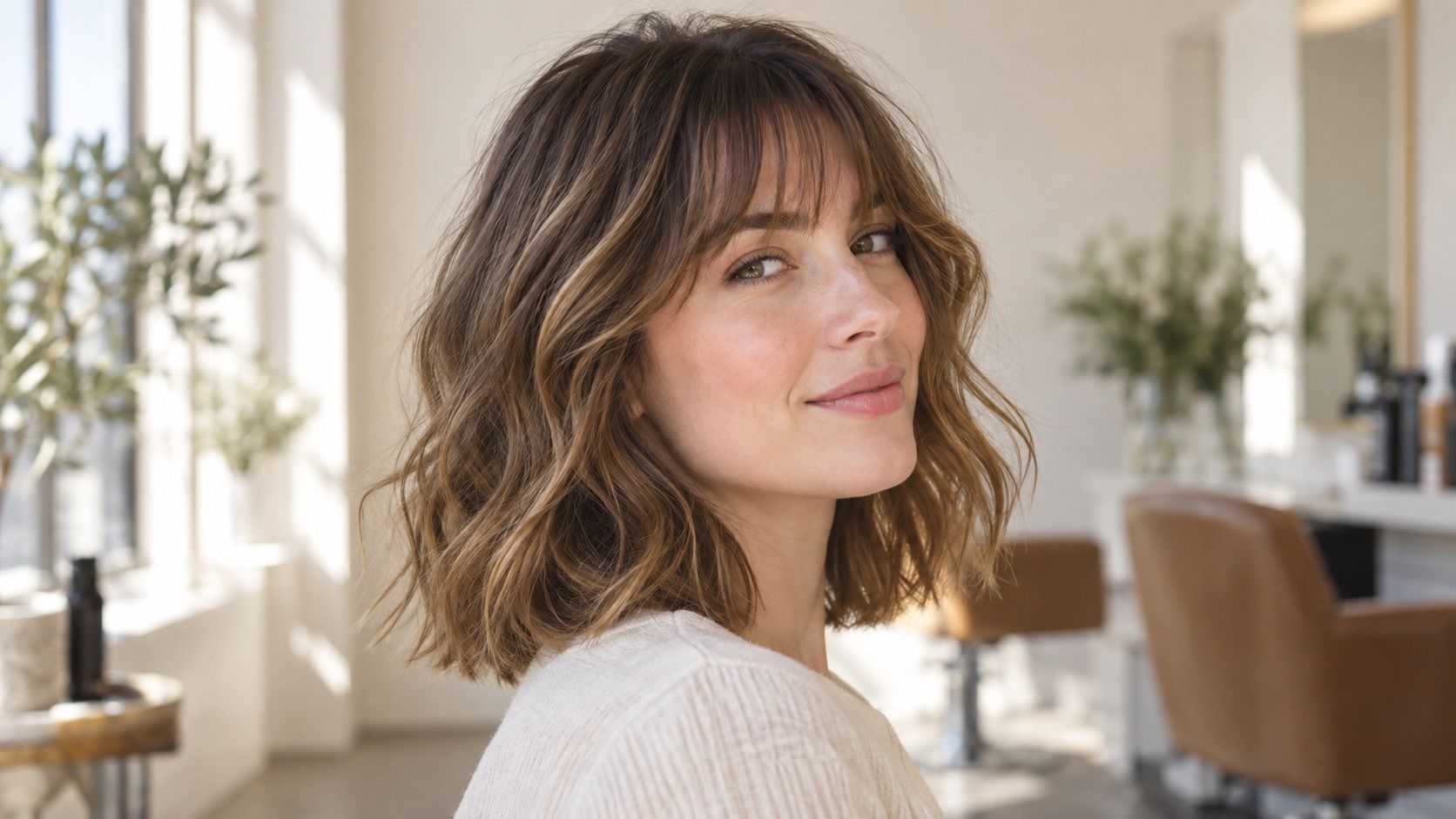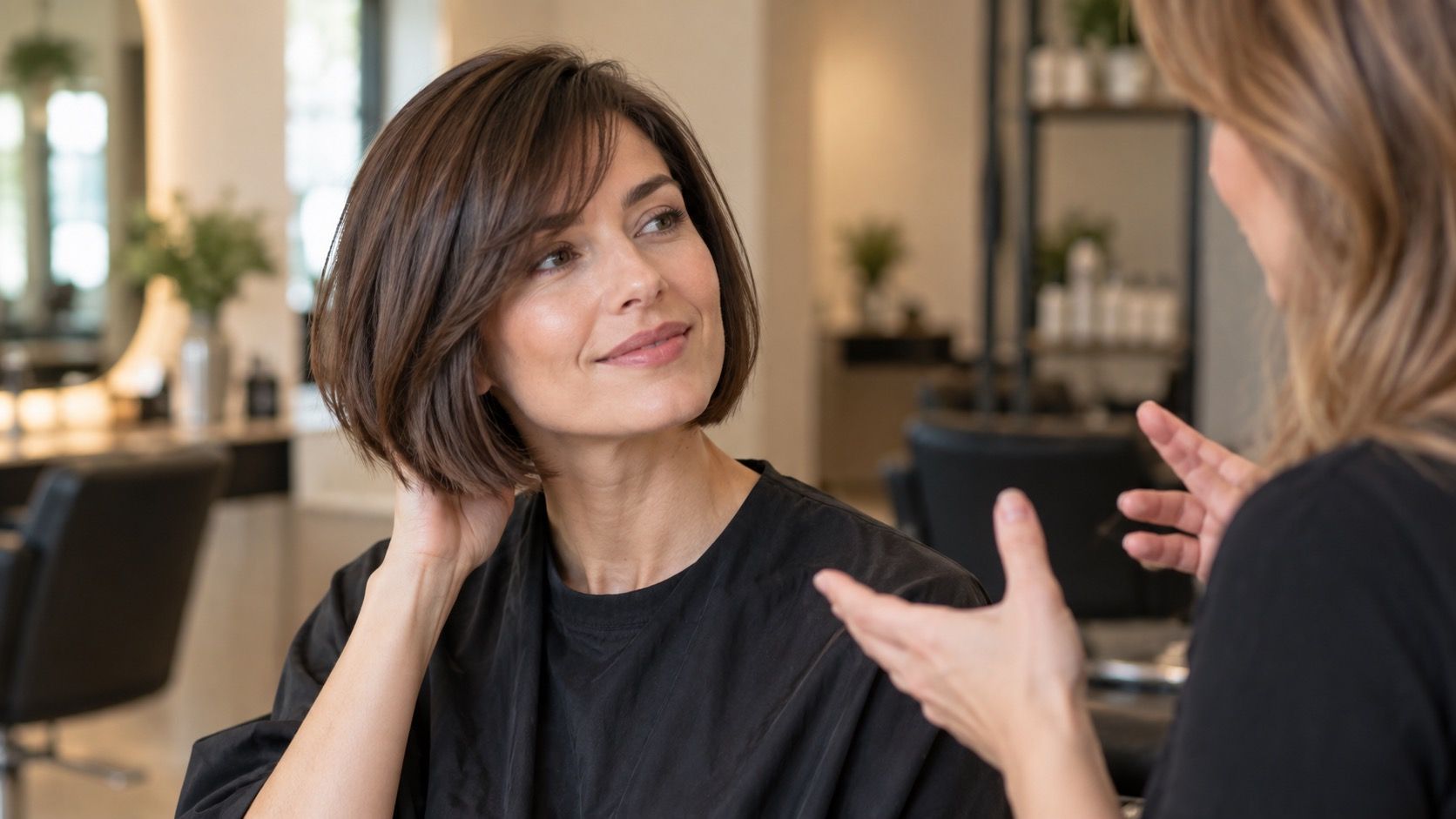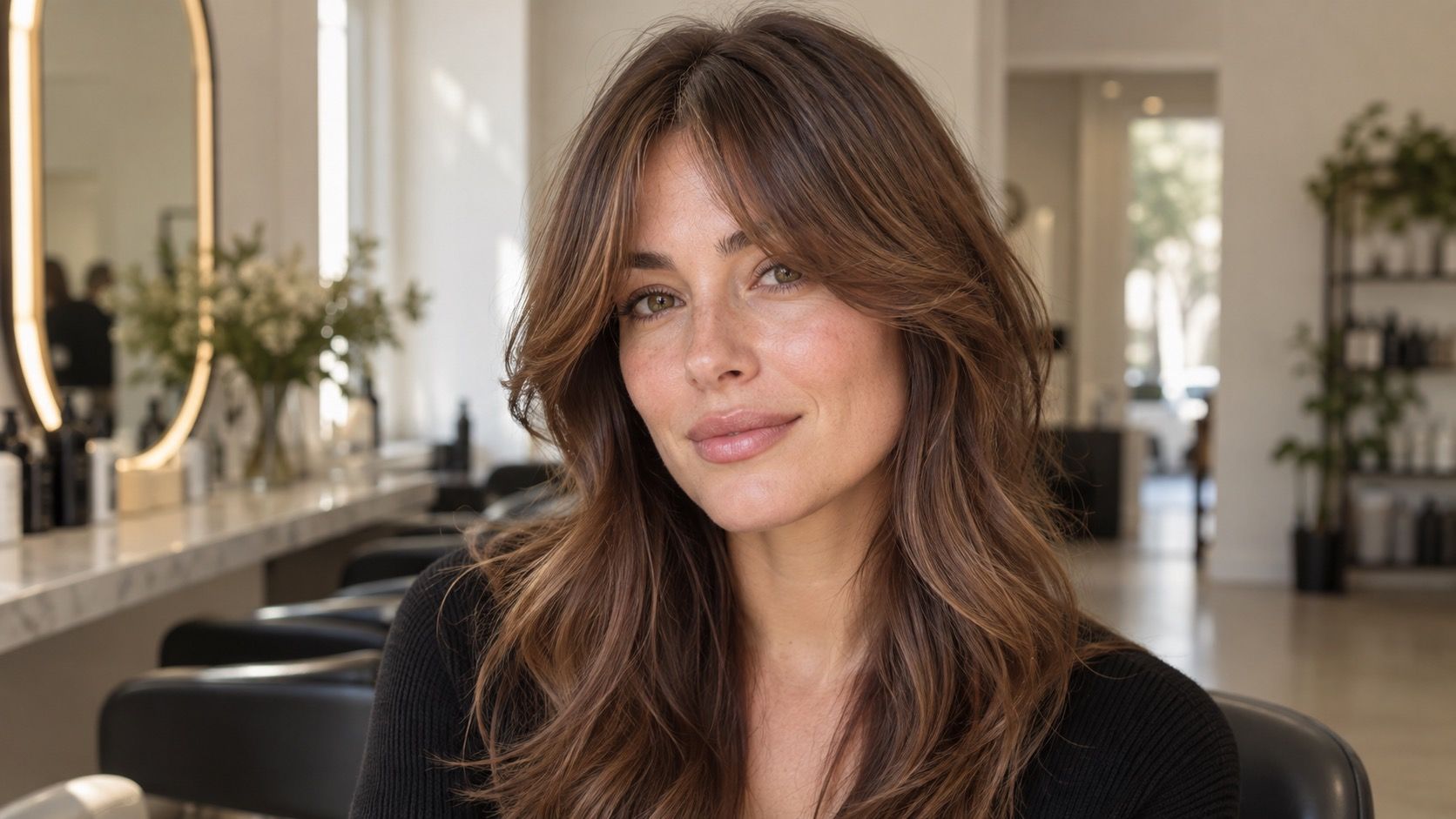
Bangs are the haircut people most often want at 11 p.m. and question at 8 a.m. A good preview does not promise a perfect result; it gives you a calmer way to compare length, width, and styling effort before a fringe is sitting on your forehead every morning. Use a bangs filter as a starting sketch, then test the details that a screen cannot know: your parting, hairline, texture, and how much daily styling you actually tolerate.
What a bangs preview gets right — and what it cannot see
When you try on bangs in a photo, the useful part is proportion. You can see whether a line across the brow makes your eyes feel more noticeable, whether a centre part opens your face, and whether a narrow fringe looks too timid beside full cheeks or a strong jaw. Take the picture in daylight, with your head level and hair worn as you normally wear it. A front-facing selfie taken from below is a poor judge of anything; it enlarges the lower face and makes almost every fringe look heavier than it will in a mirror.
A bangs filter is less reliable about movement. It usually places a smooth, evenly dense curtain where real hair may separate, curl, or lift. Make three previews instead of picking one glamorous image: hair down, hair tucked behind the ears, and hair pulled back. The third view matters because the fringe becomes the whole story in a ponytail. If the preview only works with perfect loose waves, treat that as a styling reference, not a decision.
Curtain, wispy, and blunt bangs solve different problems
Curtain bangs are often the softest first experiment because the centre opening lets the face remain visible and the longest pieces can blend into face-framing layers. They ask for a deliberate part, though. If your hair naturally falls left after a shower, a perfectly split curtain will need coaxing. Wispy bangs use less density and leave more forehead showing; they can feel lighter on fine hair, but sparse ends look accidental when the hair is oily or humid.
A blunt fringe creates the clearest visual change. It can make a simple long cut look intentional, yet it also exposes every small issue: a cowlick, an uneven hairline, glasses pushing hair upward, or a forehead that gets shiny by lunchtime. In a preview, compare a brow-skimming blunt line with one that ends a little above the brows. The latter may look less dramatic in a still photo but is often easier to live with between trims.
| Option | Best thing to check in a preview | Everyday caveat |
|---|---|---|
| Curtain bangs | Width at the cheekbones and the centre part | They need the part to cooperate |
| Wispy bangs | Whether the lightness still reads as intentional | Fine sections can separate quickly |
| Blunt fringe | Length against brows and glasses | It shows growth and cowlicks fastest |
Check length against your brows, not a beauty app line
The shortest point is where regret tends to live. In the preview, mark the brows, the top of your lashes, and the bridge of your glasses if you wear them. A fringe that ends at the lashes in an edited photo may enter your eyes when you lean forward, and curly or wavy hair can rise after it dries. Ask the stylist to explain the intended dry length, not only the wet line they plan to cut.
There is a low-tech test worth doing at home. Twist a small front section, clip it at the proposed length, and look at it while reading, cooking, and stepping outside. It will not imitate real bangs, but it reveals whether having hair on your forehead annoys you. Try this on a windy day too. People who love the look in a still image sometimes dislike the constant instinct to sweep the fringe aside.
Your hairline and cowlick get the final vote
Stand in front of a mirror with clean hair and find the direction of the first inch at the hairline. A cowlick near the centre may push bangs into a split; one near a temple can make one side stand up. This is not a reason to rule out a fringe. It is a reason to choose a shape that acknowledges the behaviour. A longer, textured edge can accommodate a small split better than a rigid blunt line cut across it.
Density matters just as much. Thick hair can make a small fringe look like a shelf if too much hair is borrowed from behind the hairline. Fine hair may need a wider triangular section to look present, but taking too much can thin the sides. In the salon chair, ask to see the section before it is cut. That tiny pause is practical, not fussy: it lets you judge whether the fringe is being built from a manageable amount of hair.
Test maintenance on an ordinary morning
Which bangs suit me is partly a face question and partly a routine question. A fringe can demand a quick wash even when the rest of your hair is fine for another day. It may need a small round brush, a dryer nozzle, or simply five calm minutes to reset after sleep. If your weekday mornings are rushed, preview the style with your usual makeup, glasses, and coat rather than with a full evening look.
Plan trims before you commit. Blunt bangs often look their sharpest with frequent small appointments, while curtain bangs usually have a more forgiving grow-out. Do not assume you will trim them yourself because a video makes it look casual. Home trimming is where one crooked corner turns into a shorter and shorter correction. A good first fringe is allowed to be slightly conservative; you can always remove more length on the next visit.
Bring clear references to the stylist
Bring two or three saved previews, including one that you dislike. Say what you notice: “I like the opening here, but not the thickness,” or “I want the brow length, not the heavy corners.” This is more useful than asking for a celebrity fringe by name. The stylist can compare those references with your texture, parting, and previous cut.
Then ask for an honest version of the plan: where the hair will be taken from, whether it will be cut dry or adjusted dry, how it will sit after your usual wash, and how soon it needs a trim. The safest conversation ends with a staged option—start longer, wear it for a week, then refine. That leaves room for your real life to answer the question that a try-on cannot: not just whether bangs look good, but whether you enjoy having them.