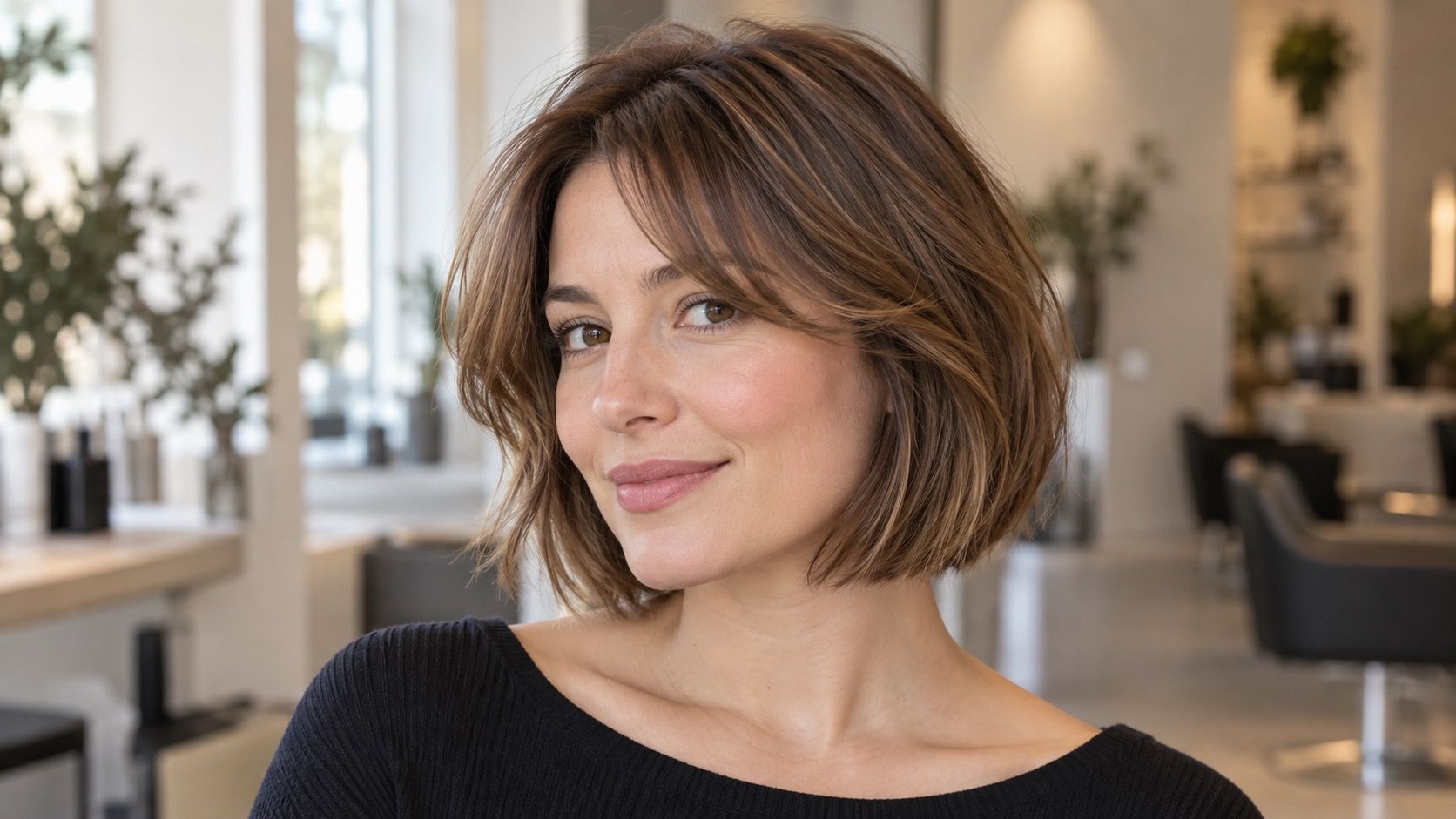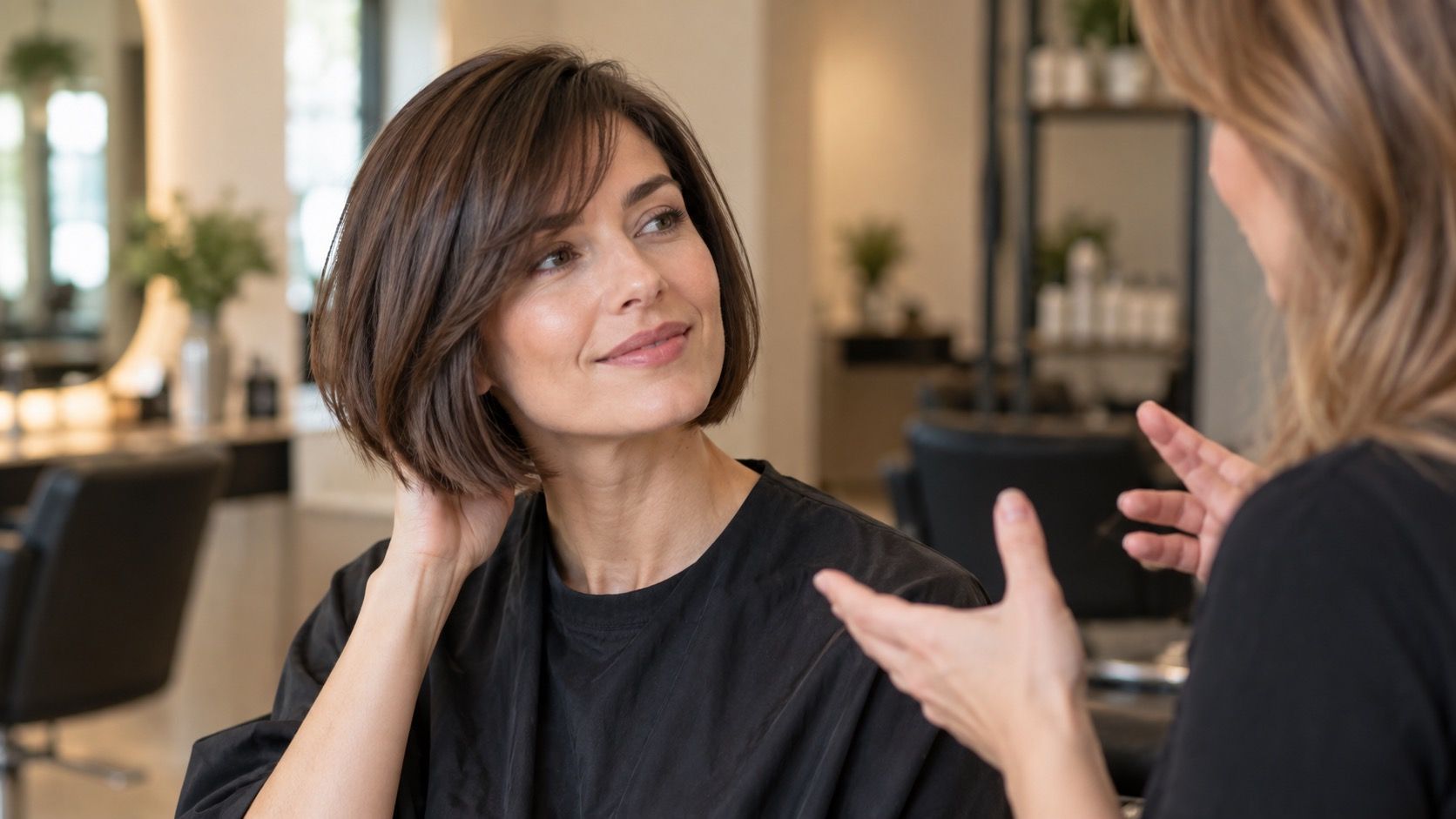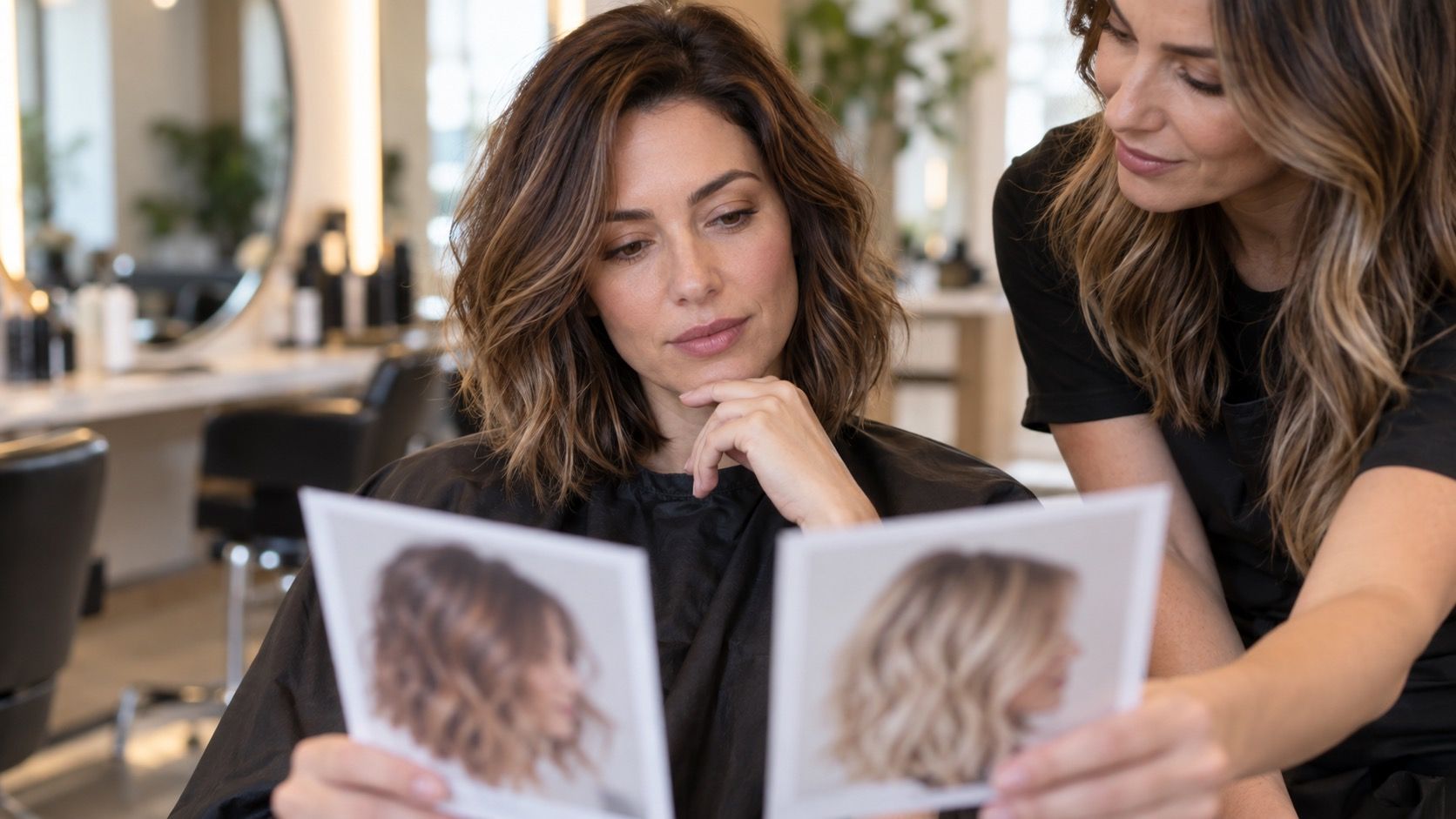
A virtual hairstyle try on is most useful when it stops a rushed salon decision, not when it promises to predict your next haircut perfectly. A filter can make the choice less foggy: it lets you compare a fringe with bare forehead, a collarbone length with a chin-length cut, or a clean outline with softer layers while you are still sitting at home. Treat the preview as a fitting room mirror. It is there to show proportion and direction; your hairdresser still has to deal with growth patterns, density, texture and the very real fact that hair moves.
Start with the question you actually need answered
Before opening a hairstyle simulator, name the decision that has been circling for weeks. Is it whether to lose four inches, whether bangs will feel intrusive, or whether a blunt shape will make your current ends look heavier? Testing ten unrelated looks in a row is entertaining, but it usually produces a camera roll with no conclusion. Pick two variables first: length and fringe are a sensible pair, while colour, curls and a radical new parting can wait.
Keep one version close to your present cut. That gives your eye a reference point and makes change visible. Then make two or three deliberate alternatives: for example, a long bob just above the shoulders, the same bob with curtain bangs, and a version kept a little longer at the front. When people ask whether they can try hairstyles online, this quiet comparison is the part that helps. The most flattering thumbnail is less important than the option you can imagine wearing on an ordinary Tuesday.
Use a plain selfie, not your favourite portrait
The best starting image is usually slightly boring. Stand facing a window in even daylight, hold the camera around eye height, and let your whole hairline and the sides of your head appear. A relaxed expression is useful because it is the expression you will have when you catch yourself in a shop window. Portrait mode, a dramatic overhead lamp and a tilted holiday photo can all make a preview look more convincing than it deserves.
Pull hair away from the face only if the tool needs a clear outline; otherwise show the way you usually wear it. A centre part hidden under a deep side sweep changes where a digital fringe lands. If you wear glasses most days, take one photo with them and one without. The image is not a test of your face. It is a practical map for placing hair around the hairline, temples and jaw, so missing those edges makes the result less reliable.
| Photo choice | What it helps reveal | What can mislead |
|---|---|---|
| Front-facing window-light selfie | Length, parting and fringe placement | Very little movement in the hair |
| Three-quarter photo | Volume around cheek and jaw | Some filters place both sides unevenly |
| Heavily edited portrait | Mostly entertainment value | Blurred hairline and altered proportions |
Test length before you test a complicated style
Length is the useful first pass because it changes your routine as well as your reflection. Try a cut at the jaw, then at the neck, then at the collarbone. Look at where the ends meet your shoulders and at whether the preview exposes a neckline you normally keep covered. A difference of two or three centimetres can change a bob from crisp to awkward, especially if your ends turn outward when they touch a collar or scarf.
Do not read the digital outline as a measurement. Instead, use it to make a salon question more specific: “Could we keep the front near this point, but leave enough length for a small ponytail?” If a short version gives you a jolt of recognition, save it beside a longer safety option. A haircut preview is valuable when it turns “shorter, maybe” into a range you can discuss, rather than into an image you expect to reproduce pixel for pixel.
Try fringe and face framing with a little suspicion
Fringes are where a virtual hairstyle try on can be persuasive and unreliable at the same time. The tool may draw a smooth curtain bang even if your hair separates at the crown or if a cowlick sends one side upward. Look past the perfect sweep and ask more mundane questions: is the fringe above your eyebrows, on them, or in your eyelashes? Does it narrow the open space around the temples? Would you be happy pinning it back after a gym session?
Make one preview with a softer, longer face-framing layer and one with a more obvious bang. Compare them at normal screen size, not only zoomed in. The longer version often tells you whether you want a change without committing to a daily styling task. If the filter makes both versions look identical, that is useful information too: the difference may be too subtle to be worth explaining at an appointment.
Compare results like a small experiment, not a beauty contest
Save no more than four finalists and label them by the change, not by a vague feeling: “jaw bob, centre part” or “long layers, curtain fringe.” View them on a phone and then on a larger screen. A tiny display can hide where a generated edge floats above the neck, while a larger image may reveal that the volume has been painted into an area where your own hair lies flat.
Give every option the same conditions: the same selfie, similar colour, and no sudden change from sleek hair to elaborate curls. Ask what it would look like after air drying, after a windy commute, and six weeks into grow-out. The answer may not eliminate a style, but it separates a useful visual direction from a costume. If you feel drawn to a look only when the filter also changes your makeup or lighting, keep that doubt in the notes.
Bring the preview to the appointment as a conversation starter
Bring two saved images, not a gallery of forty. Show the stylist the virtual result and say what you liked about it: the exposed neck, the softer line at the cheek, the idea of more movement. Then show a current-hair photo if it was taken on a normal wash day. This helps the conversation move from “make me look like this” to what can be built with your own texture and density.
A good consultation includes the unglamorous details a filter cannot supply: how often you want trims, whether you heat-style, where your hair parts naturally, and how much length you are prepared to lose. Ask where the shortest layer would sit once it dries, and whether the fringe needs daily shaping. The preview has already done its job if it gives you language for those questions. It does not need to win an argument with the mirror.