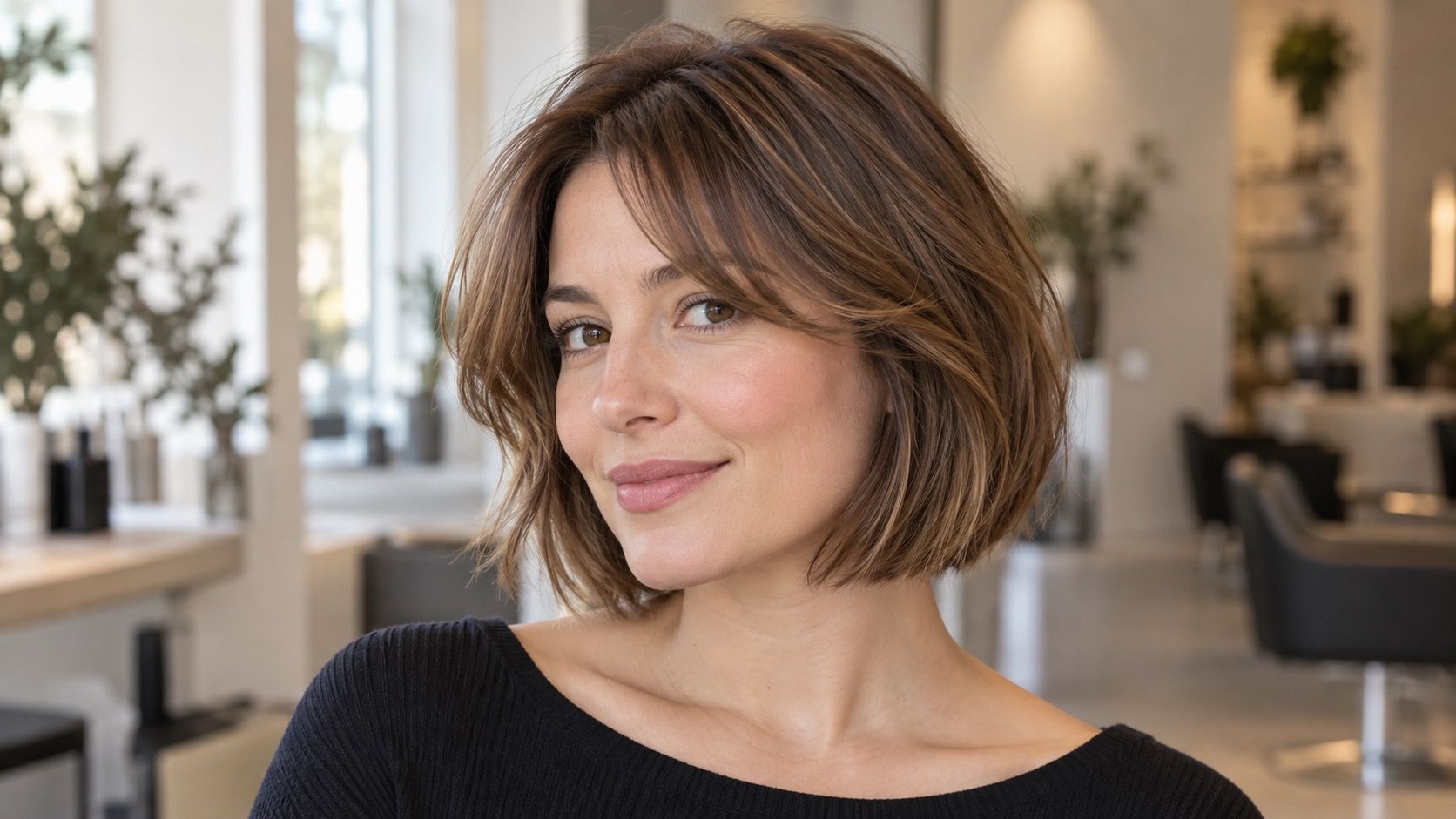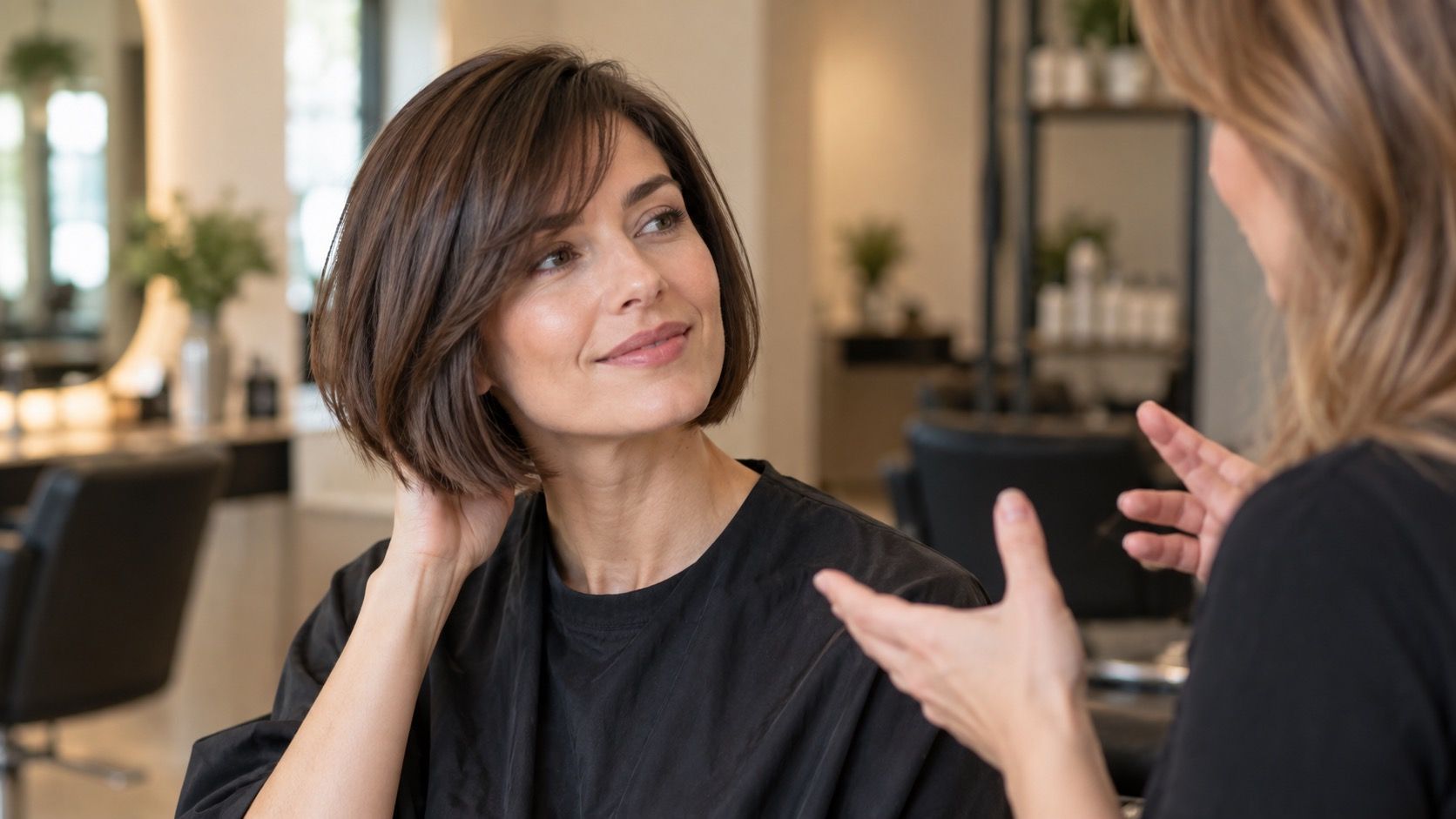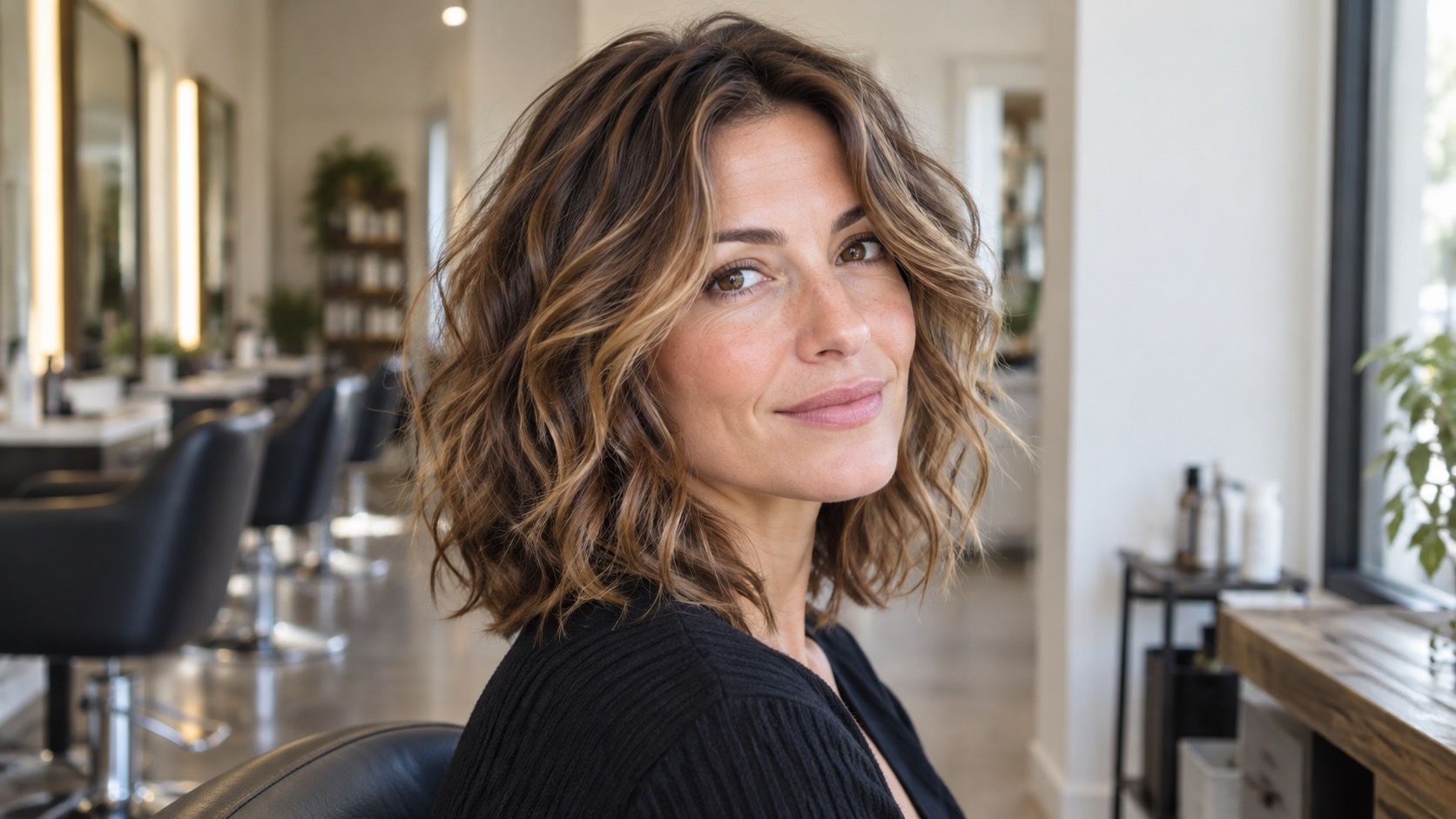
Wavy haircuts look especially tempting in a virtual preview because a little bend makes almost any shape seem effortless. The useful question is not whether the image has enough movement; it is whether the proposed shape gives your own waves somewhere sensible to sit. When you try wavy hairstyles on, use the filter to compare placement and weight, then bring your everyday wash-day behaviour back into the decision. Hair that looks lively on a digital model may need a different length, fewer layers, or a more patient morning in real life.
Begin with your wave pattern on an ordinary day
Take the photo after your hair has dried in the way it usually does. Do not brush it flat solely for the filter, and do not choose the rare day when every section behaved. The pattern around the temples, nape and crown matters more than a polished front curl. Many people have a loose S shape on top and a stronger bend underneath; a preview built on a smooth selfie will miss that contrast.
Notice where your hair gains bulk. If it expands at shoulder level, a cut that ends exactly there can create a broad shelf even when the simulated result looks airy. If your waves flatten near the crown, adding short layers may not supply the lift shown on screen. These are not reasons to avoid wavy haircut ideas. They are the practical details that help you decide whether a lob, a soft shag or longer layers is likely to feel easier rather than merely newer.
Use layers to test weight, not to chase maximum volume
Layers remove weight from particular places; they do not automatically make every wave spring up. In a virtual try-on, make one version with long, quiet layers and another with shorter pieces around the crown and cheeks. Look at the lower edge. Does the hair still feel substantial, or has the filter turned it into a cloud of disconnected ends? A little separation can be appealing, while too much can make a dense head of hair feel permanently unfinished.
Think about the hair you collect in the shower and the way the ends look after eight weeks. Fine wavy hair may welcome a few carefully placed layers, but very short internal layers can disappear into frizz when humidity rises. Dense hair can carry more shaping, yet it may also need enough perimeter to avoid triangular volume. Ask a stylist where the shortest layer would actually begin, rather than asking for “more layers” as a single instruction.
| Try-on option | Look for in the preview | Reality check |
|---|---|---|
| Long layers | Movement below the cheekbones | Will the ends still feel full after air drying? |
| Soft shag | Lift through crown and temples | Do you enjoy defining shorter pieces? |
| Blunt lob | A clear, weighty lower line | Does the length meet your shoulders and flip? |
Compare a lob, soft shag and long shape at the same angle
A lob is often the calmest test. It lets you see what happens when the ends sit around the collarbone without asking the preview to invent much texture. Try it with a centre part and then with your usual part. If the ends land on the shoulder, remember that real waves can make that contact point flick outward. A slightly longer or shorter cut can feel markedly different, even if the thumbnails seem almost identical.
A soft shag introduces more contrast: shorter pieces around the face, visible layering, and a less solid outline. It can be a welcome change when waves look heavy, but the preview will usually give it better separation than a quick air dry. Long shapes are worth including as the control option. Sometimes the imagined transformation is really a wish for stronger face framing or a different parting, not a wish to lose length. Seeing all three beside each other makes that distinction easier.
Test bangs where your hair actually parts
Wavy curtain bangs can look soft in a hairstyle filter, especially when they are blended into cheek-length layers. Test them on a photo with your natural part visible. If your part pulls strongly to one side, a perfectly even centre-split fringe may be a decorative fiction. A longer, more forgiving version is often the better first preview because it shows the effect around the face without pretending every morning begins with a round brush.
Check the distance between the fringe and your eyes, and save an image with the hair tucked behind the ears if that is a habit. Waves shrink as they dry, so a digital bang at brow level may become shorter than expected. Tell the stylist whether you intend to diffuse, air dry or frequently heat-style. The same cut can read soft and open in one routine, then compact and busy in another.
Preview the wash-day result, not only the salon finish
After choosing a favourite, imagine it at three moments: freshly cut and styled, the next morning after sleep, and a humid afternoon when you have no time to reset every strand. This is where a virtual preview needs a dose of skepticism. It can show a broad silhouette and the direction of the layers, but it cannot know which section frizzes first or whether the nape dries faster than the front.
Use the saved images to identify a tolerance, not a guarantee. Would you still like the cut if the crown were flatter? Would the shape work when one wave bends differently? The best haircuts for wavy hair usually leave room for variation. A good preview helps you recognise that you want a lived-in outline rather than a permanently symmetrical result, and that is a much more useful thing to take into a consultation.
Turn the preview into a specific salon conversation
Bring the wavy version you liked and one photo of your natural hair, ideally from the back as well as the front. Point to the feature you want to keep: weight through the ends, movement around the cheekbones, or a longer piece that can be tucked away. Avoid treating the virtual preview as a diagram with exact instructions. It has no record of your density or your previous colour damage.
Ask how the stylist would adapt the outline for your wave pattern and what the grow-out will look like. If you only want a small change, say that plainly; there is no prize for selecting the boldest virtual option. A useful try-on leaves you with a shortlist and a clearer vocabulary. It should make the chair feel less like a gamble, while leaving enough space for a professional to work with the hair that is actually there.